Why Do Some Sweaters Prickle and Others Feel Like a Baby's Skin?
Prickle is mechanical, not allergic: fibres above roughly 28 μm are stiff enough to stimulate nerve endings, while 15–19 μm merino or cashmere bends against the skin. Surface scales make it worse — coarse, lifted scales act like barbs. Finishing helps: singeing, softening and mercerising close the scales, and a conditioner soak can rescue a mildly prickly knit.
Fibre diameter, surface scales and finishing — the three real reasons a sweater scratches, plus how to read a label and soften a prickly knit.
Every autumn and winter, soft, romantic knitwear fills the streets. Yet many of us know the “pain and pleasure” experience: you buy a beautiful sweater, put it on, and it feels like countless tiny needles pricking your skin — itchy, distracting, impossible to sit still in all day.
Why does one sweater scratch while another feels as soft as a baby's skin? Here we break down the science from three angles — fibre microstructure, material type and finishing — and show you how to avoid the wrong knit.
1. The culprit: scales and fibre diameter under the microscope
Prickliness is not a sign of delicate skin — it comes from the physical nature of animal fibres.
Fibre diameter: thickness decides stiffness
Skin is highly sensitive to outside stimuli, especially to fibres above a certain diameter.
- Prickly knit (coarse fibre): usually 25 microns and above, such as ordinary sheep's wool. Coarse fibres are stiff and cannot bend, so they meet the skin like tiny steel needles and trigger pain receptors.
- Non-prickly knit (fine fibre): 15–19 microns, such as merino wool or cashmere. Fine enough to bend like a hair and lie flat on the skin — no prickle at all.
Surface scales: the barb effect
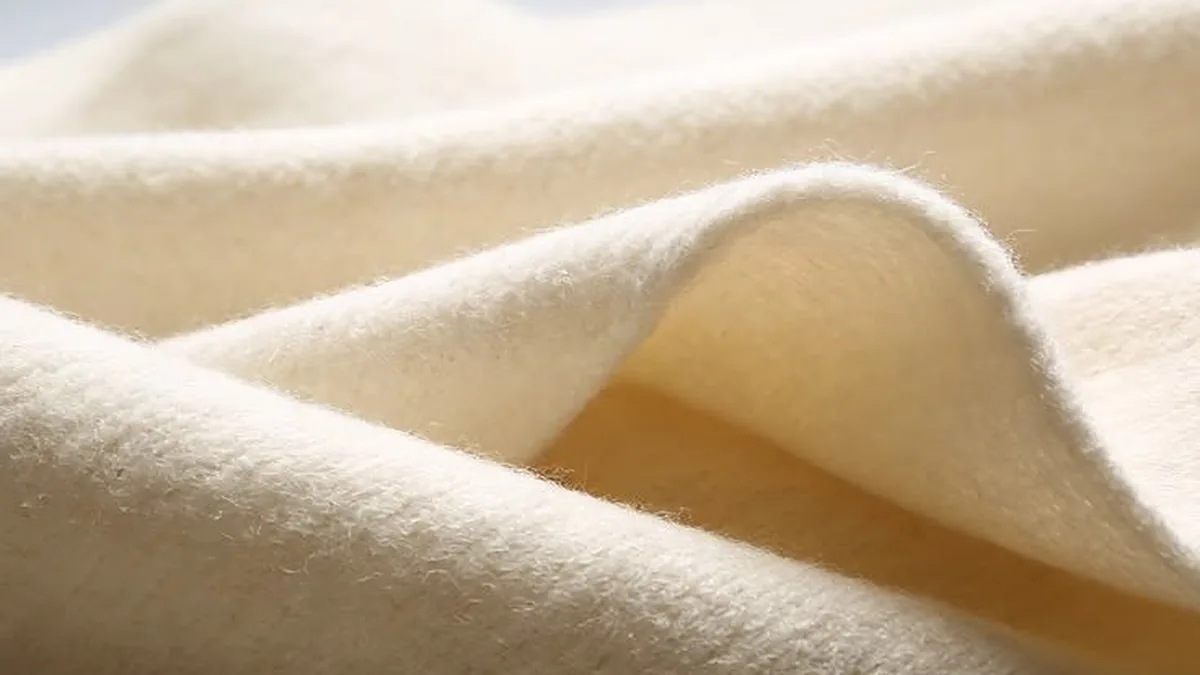
Natural wool is not smooth. It is covered with a cuticle layer of scales, much like fish scales.
- Lower-grade, shorter wool has large, lifted scales that rub against the skin like barbs, again and again.
- Top cashmere, or wool that has been specially combed, has smooth scales lying flat along the fibre — the touch is silky and warm.
2. Match the material: which sweaters are naturally skin-friendly?
When shopping, reading the composition label is the first step to avoiding discomfort.
| Material | Skin-feel index | Hand-feel | How to wear |
|---|---|---|---|
| Top-grade cashmere | ★★★★★ | Exceptionally soft, almost weightless, cloud-like | Wear directly against skin |
| Ultra-fine merino | ★★★★☆ | Fine, smooth, naturally elastic and breathable | Against skin — ideal for office layering |
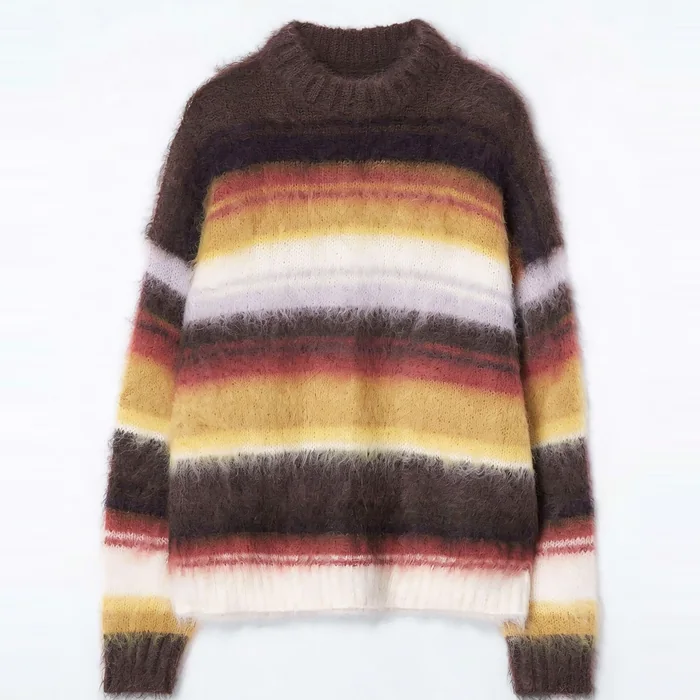
| Mohair / alpaca | ★★☆☆☆ | Lofty and full of character, but the longer fibre ends feel slightly stiff | Layer over a tee or shirt |
| Standard woollen-spun wool | ★☆☆☆☆ | Substantial and wind-resistant, but coarse and clearly prickly | Always layer — not for bare skin |
3. The finishing secret: why premium knits feel gentler
Beyond the raw material, finishing is the hidden force that decides whether a sweater prickles.
- Singeing: after knitting, high-quality sweaters pass through a fine singeing step, where a flame instantly burns off the short, stiff fibre ends standing up from the surface, leaving it perfectly flat.
- Softening and mercerising: good factories use eco-friendly enzymes or softeners to close the scales and make the fibre loftier and softer, reducing prickle at the source.
- Local tip: in dry, static-prone regions, static increases friction and cling between fibre and skin, which can double the prickly feel. Antistatic, higher-moisture natural fine fibres matter even more there.
4. Practical tips: rescuing a slightly prickly sweater
If you already own a sweater that prickles slightly, or an old one has stiffened between seasons, these care methods can bring it back.
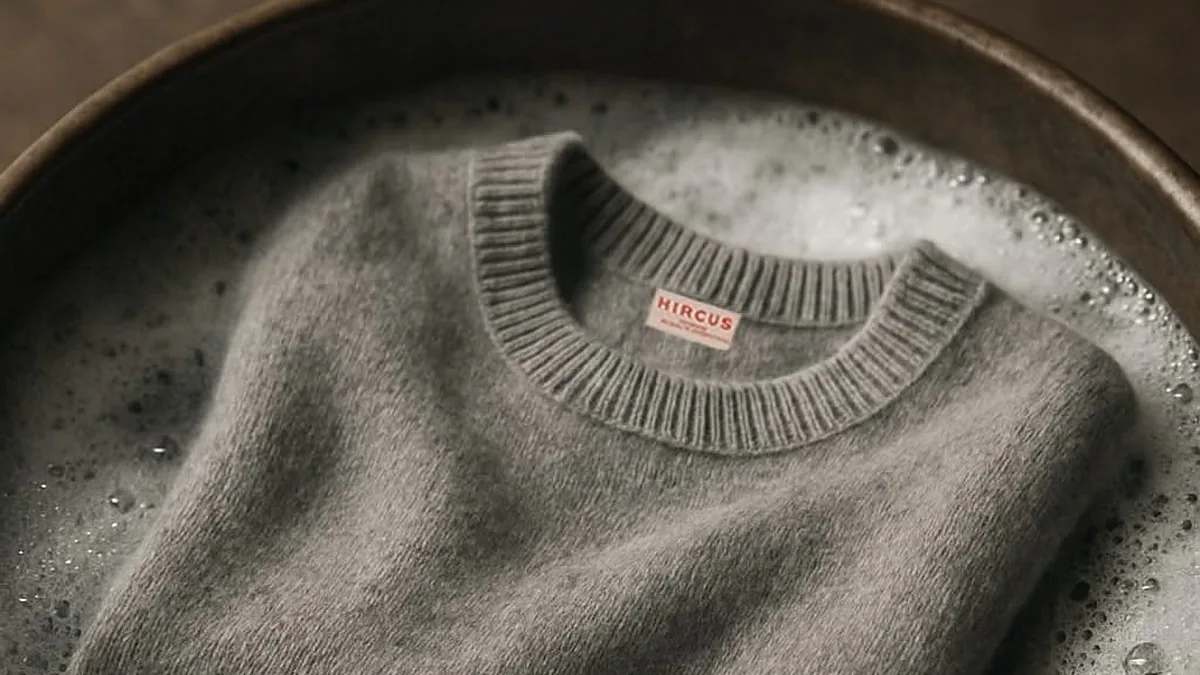
- Conditioner or white vinegar: soak the sweater for 15–30 minutes in water below 30°C with a few drops of white vinegar or hair conditioner. Cationic surfactants neutralise static and help the scales close, softening the fibre almost immediately.
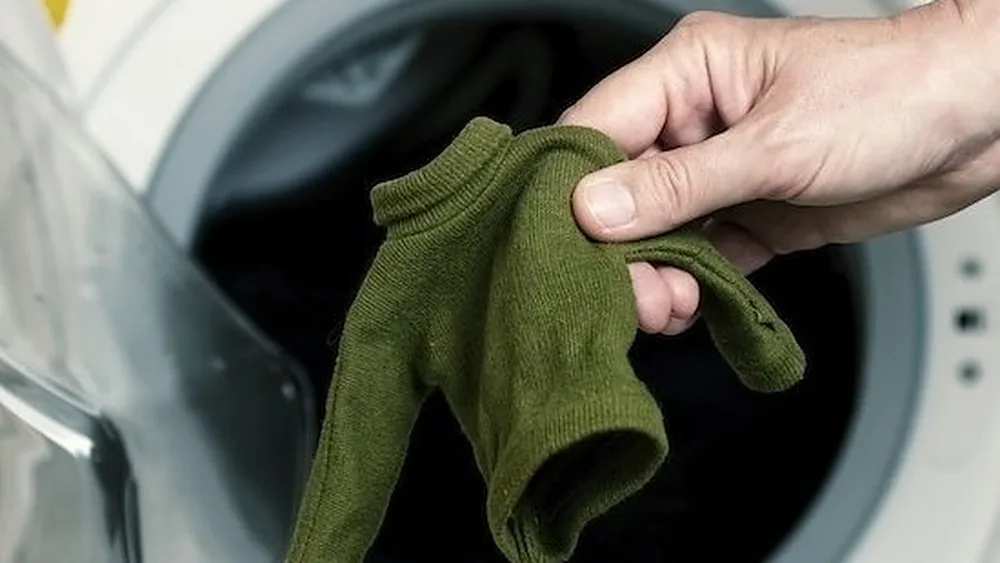
- No hot water, no hard wringing: hot water and aggressive machine washing shrink and felt the wool and open every scale — the sweater ends up as hard as armour.
- Smart layering: for mohair or chunky knits, wear a thin cotton tee, turtleneck or silk shirt underneath — it blocks the prickle completely and adds a stylish layered look.
Final thoughts
Refusing prickly knitwear is, at heart, a commitment to quality of life. A truly good sweater should hold the body like a second skin.
Next time you choose a sweater, look twice at the composition and the count. Choose merino or cashmere, and leave the itch behind this winter.
Is a prickly sweater an allergy?
No — it is mechanical. Fibres above about 28 μm are stiff enough to stimulate nerve endings.
Which fibres feel softest against skin?
Merino below 19.5 μm, cashmere at 14–16 μm, and combed cotton.
Can a prickly sweater be softened?
Yes — soak in cool water with conditioner or white vinegar for 15–30 minutes.
Olivia handles operations content for Jinya, covering knitwear sourcing, product development and garment care — turning the questions buyers ask on the factory floor into practical, checkable guides.
Ms. Liu has run knitting floors for more than 20 years, overseeing yarn routing, machine programming, linking and final QC. She reviews every technical claim published here.