Cashmere vs. Wool: What's Actually Different?
Wool is shorn from sheep, cashmere is combed from goats in cold highlands — three to four goats barely supply one sweater, which is why cashmere is called soft gold. Cashmere fibres measure 14–16 μm versus 20–30 μm for wool, so it feels smoother and is about 8× warmer by weight. Wool wins on durability and price; cashmere wins on touch, and needs gentler washing.
From the animal it comes from to fibre diameter, warmth and care — a clear breakdown of why cashmere costs several times more than wool.
When autumn arrives, knitwear comes out of the wardrobe. A sweater that warms at the touch, a scarf that rests lightly around the neck — natural animal fibres give us a gentle defence against the cold.
Yet buyers still hesitate at the label: one says 100% wool, another 100% cashmere. What is the real difference — and why can the price differ several times over? Here is the breakdown by origin, hand-feel, warmth and care.
1. A different animal entirely
A common misconception is that cashmere is simply wool cut shorter. It is not — the two fibres come from different animals.
Wool is shorn from sheep. Flocks are large and the fleece grows back every year, much like a haircut.
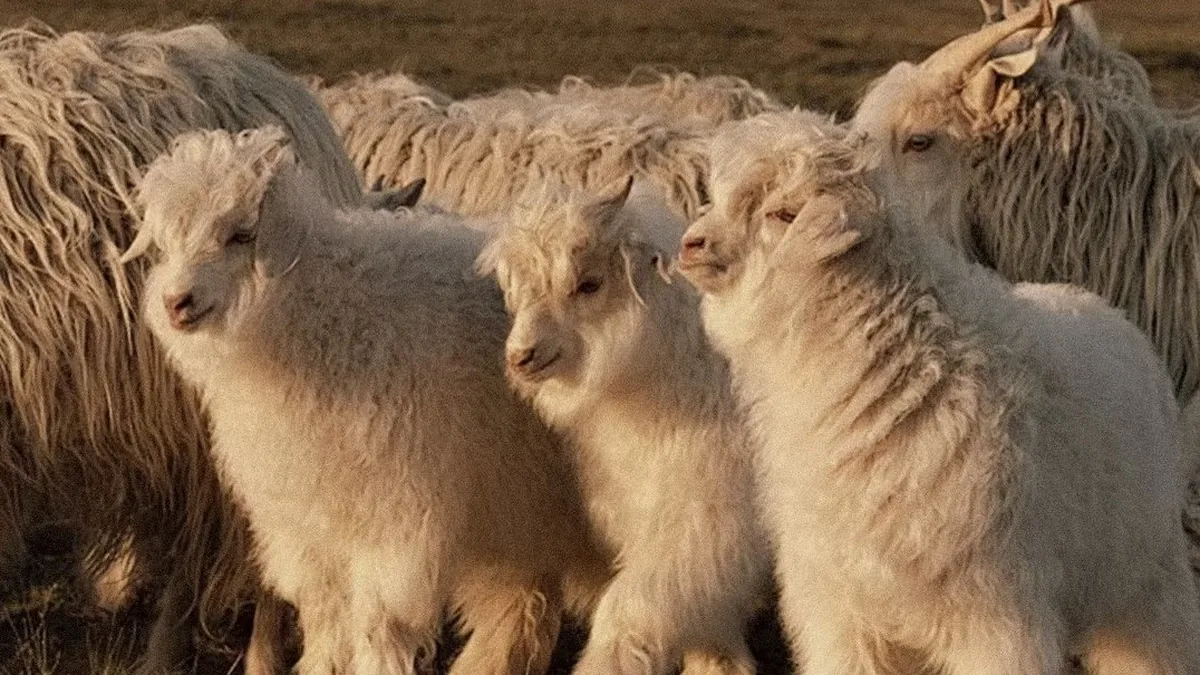
Cashmere comes from goats raised in cold, high-altitude regions such as Inner Mongolia. It is not shorn but combed out by hand with a special iron comb during the spring moult, taking only the fine undercoat.
- Scarcity: one sheep produces enough wool for several sweaters a year, while three to four adult goats barely yield enough cashmere for a single pure-cashmere sweater — hence the name “soft gold”.
2. Fibre diameter: the science behind softness and warmth
Why does one sweater prickle against bare skin while another feels as soft as a baby's cheek? The answer sits in the physical structure of the fibre.
| Dimension | Wool | Cashmere |
|---|---|---|
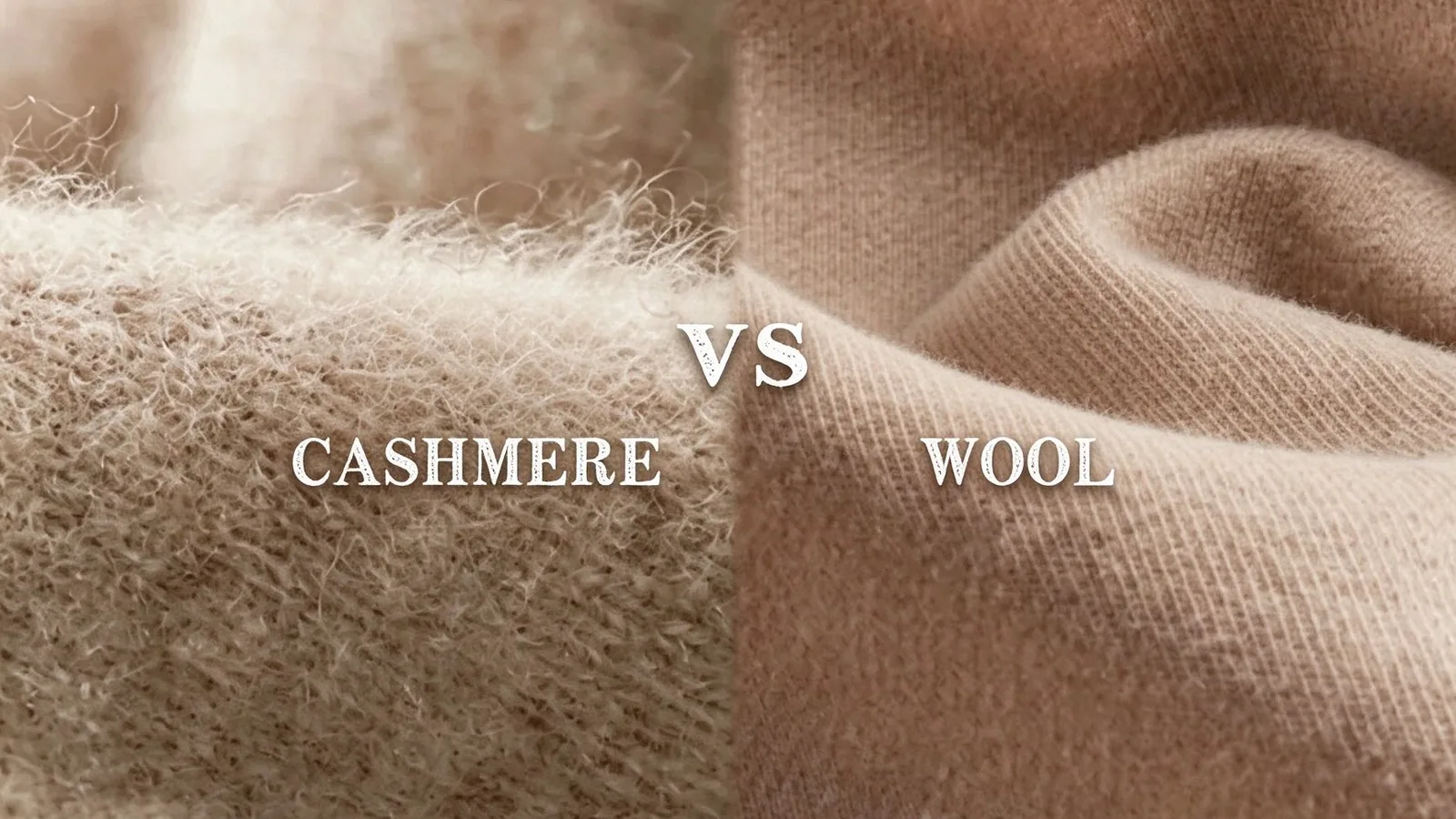
| Fibre diameter | About 20–30 microns | About 14–16 microns (one fifth of a human hair) |
| Against skin | Coarser with more scales; sensitive skin may prickle | Very fine, smooth scales, no prickle — soft and snug |
| Warmth | Good; traps still air between fibres | Around 8× warmer at equal thickness thanks to its hollow structure |
| Weight | More substantial and grounded | Extremely light, almost no weight on the body |
3. Buying and care: making an investment knit last
Wool or cashmere, both are natural protein fibres and both need gentle handling.
- On pilling: good natural knits pill lightly — that is normal friction behaviour, not proof of a fake. Use a fabric shaver gently; never pull the pills off.
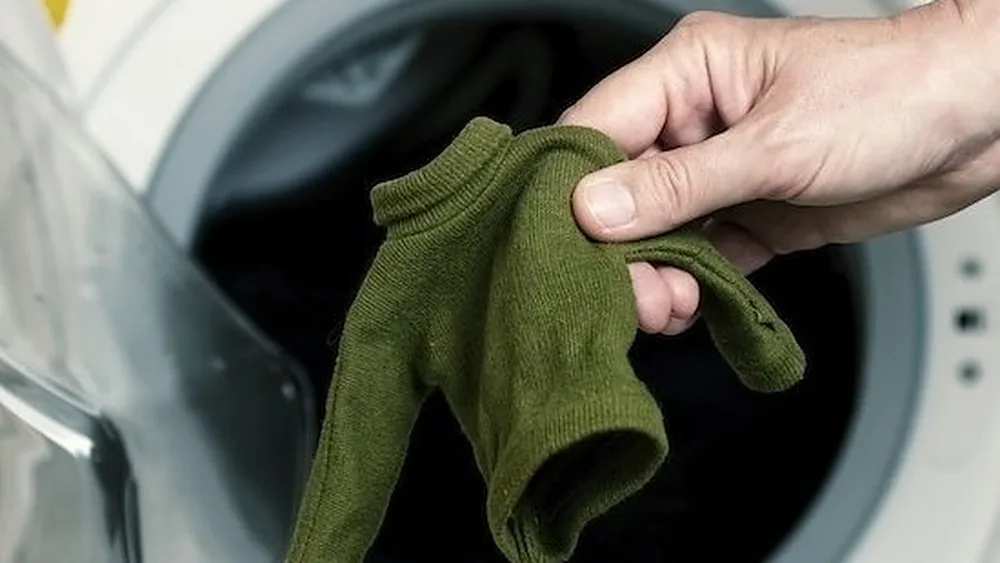
- On washing: never machine-wash or soak in hot water. Heat and agitation felt the fibres and the shrinkage is irreversible.
- The right way: a neutral wool or cashmere detergent, hand-wash below 30°C, never wring — press the water out with a towel and dry flat in the shade.
So which should you choose?
Wool wins on value, durability and structure — the everyday companion for commuting and substantial winter warmth. Cashmere is the pursuit of touch, lightness and quiet luxury: a second skin that breathes with you through an elegant winter.
Investing in a good knit is not only a treat for the skin; it is a choice for a slower, longer-lasting way of dressing.
What is the real difference between wool and cashmere?
Different animals, different fibres: cashmere is 14–16 μm and about 8× warmer by weight than 20–30 μm wool.
Why is cashmere so expensive?
Three to four goats supply barely enough down for one sweater.
Which lasts longer?
Wool is more abrasion-resistant; cashmere is softer but needs gentler care.
Olivia handles operations content for Jinya, covering knitwear sourcing, product development and garment care — turning the questions buyers ask on the factory floor into practical, checkable guides.
Ms. Liu has run knitting floors for more than 20 years, overseeing yarn routing, machine programming, linking and final QC. She reviews every technical claim published here.