Preventing Pilling and Shrinkage: Yarn Choice and Washing Secrets
Pilling comes from short fibres escaping under friction plus low twist; shrinkage comes from felting (hot water plus agitation) and from unreleased knitting stress. Specify worsted long-fibre yarn, blend cashmere 30/70 with wool, and choose anti-pilling grade 4+ acrylic for value lines. The factory fixes the rest with moderate milling, board pressing and wash tests that hold shrinkage within ±3%.
Pilling and shrinkage are not “cheap sweater” problems — they come from fibre length, twist and an uncontrolled wash. What to specify at yarn selection and finishing.
In knitwear retail and supply chain, two after-sales complaints hurt most: pills at the underarms and cuffs after two wears, and sweaters that shrink two sizes after a normal wash.
Many assume only cheap sweaters pill or shrink. In fact, even expensive cashmere or worsted wool will fail if the yarn is wrong or the finishing wash is out of control. This guide breaks down the causes and the fixes — from yarn selection to washing and pressing.
1. Why sweaters pill
The physics of pilling
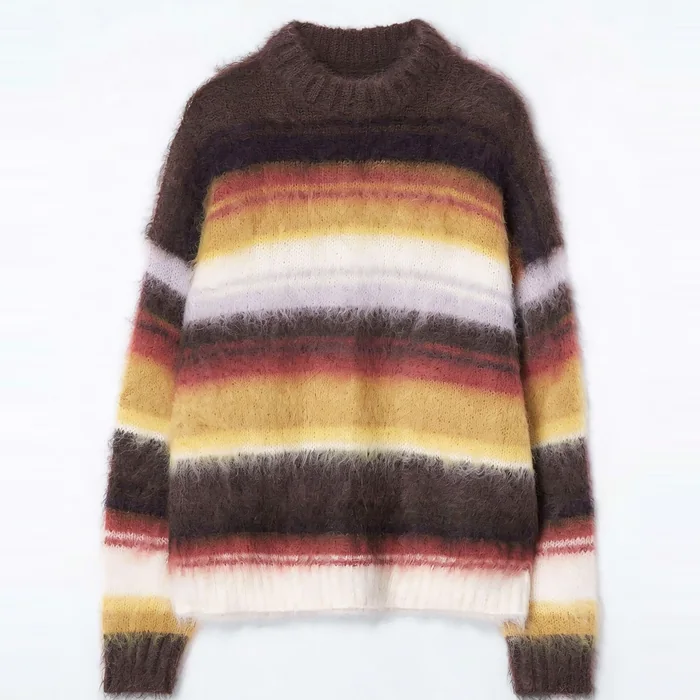
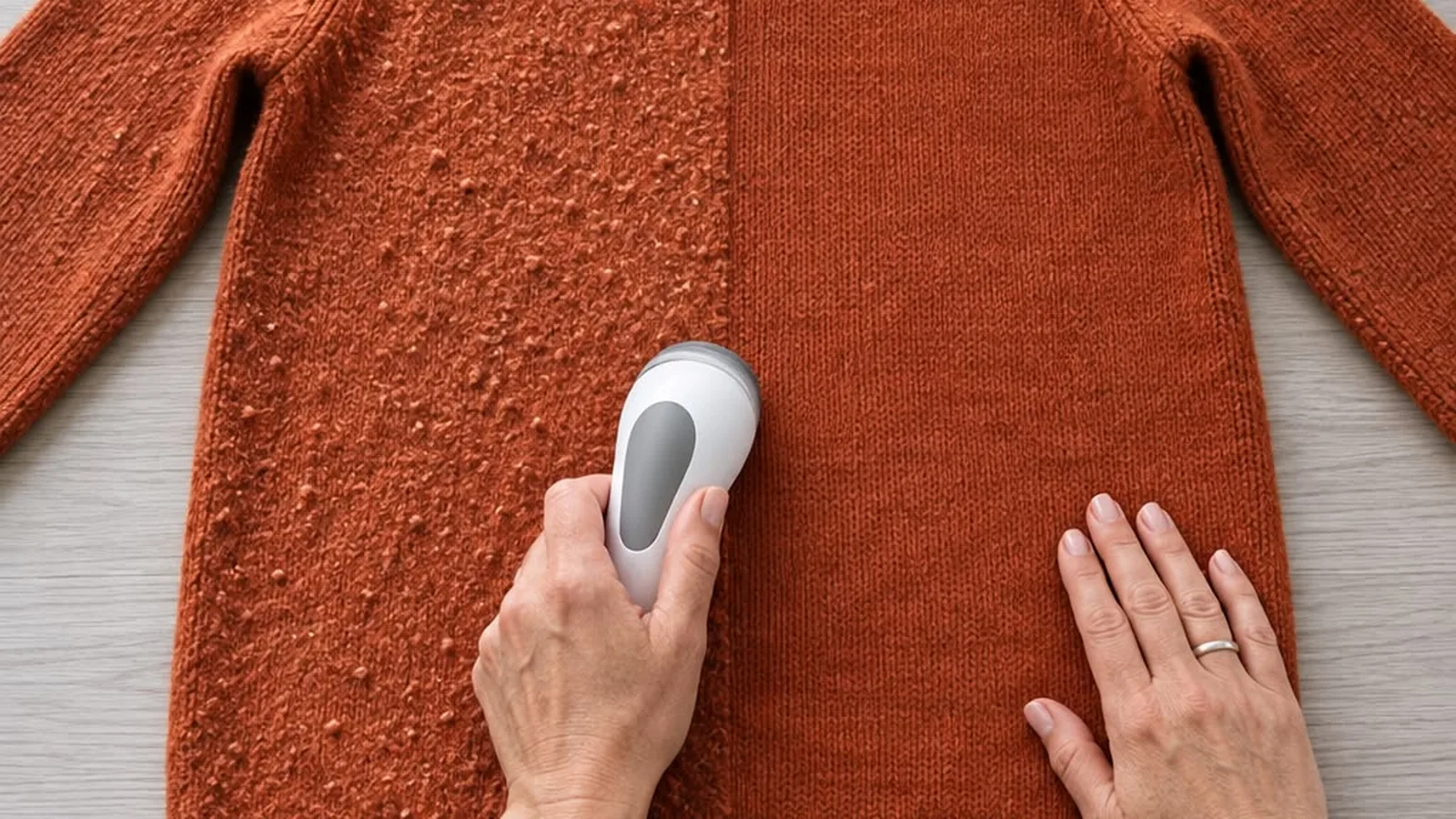
Pilling happens in three stages: friction raises loose fibres, they tangle into a pill, and the pill either falls off or stays. Free fibres on the yarn surface are pulled out by daily friction and wrap into visible balls.
- Fibre length and strength: short fibres escape the yarn more easily; very strong synthetics (ordinary polyester or acrylic) form pills that never fall off and stay on the surface for a long time.
- Yarn twist: low-twist, lofty woollen yarns hold their fibres less tightly and pill more readily.
Yarn selection against pilling
| Yarn | Pill resistance | What to specify |
|---|---|---|
| Worsted merino | High | Choose high-count worsted long-fibre yarn. Worsted spinning combs out short fibres, so the yarn is tighter and far more pill-resistant than woollen-spun. |
| Natural cashmere | Medium | Cashmere fibres are short and naturally pill a little. Use an anti-pilling treated yarn, or a 30% cashmere / 70% worsted wool blend to balance hand-feel and durability. |
| Anti-pilling acrylic blend | High | For value or test runs, specify anti-pilling grade 4+ modified acrylic or combed-cotton blends. |
2. Why sweaters shrink
Felting and relaxation shrinkage
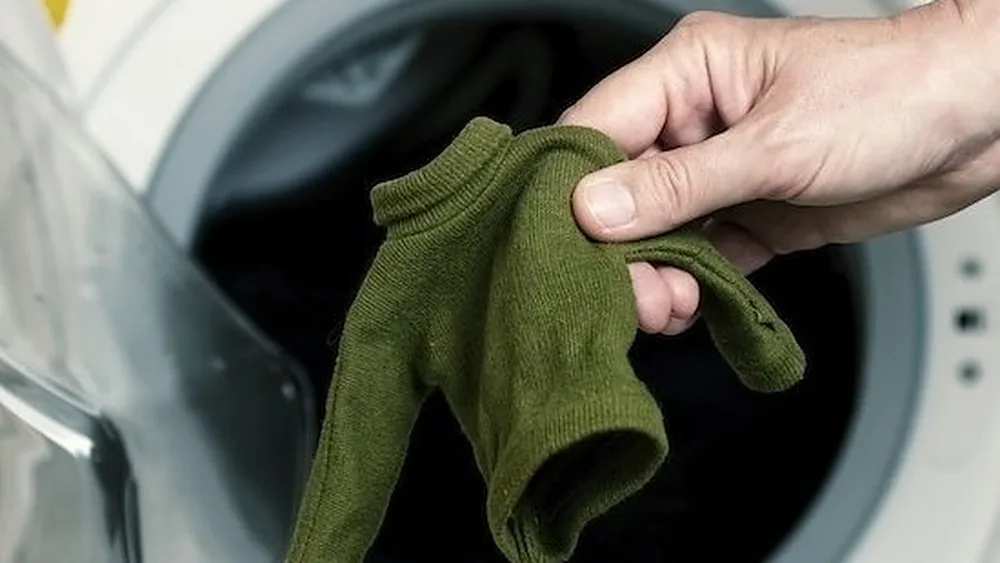
Two mechanisms dominate. Felting shrinkage (wool and cashmere): the scales on wool fibres interlock in one direction under water, agitation and heat, locking the fibres tight and irreversibly — which is why a hot wash turns a sweater into child size. Relaxation shrinkage: yarn is under tension during knitting and linking, and if the garment is not washed and steamed enough to release that stress, the first wash lets the fabric contract.
3. The factory secrets: washing and pressing
A quality sweater is not only knitted — it is washed and pressed into shape: washing and milling → drying to release stress → steam pressing on a size board.
Secret 1: balance water temperature and milling time
Soft milling uses a gentle washing agent with water typically under 30–40°C and a controlled cycle to wake up the fibre's hand and halo. Over-milling — extending the wash to satisfy a “must feel extremely soft” request — damages the fibre surface, which increases pilling and raises shrinkage risk in bulk. Keeping a little body is the prerequisite for durability.
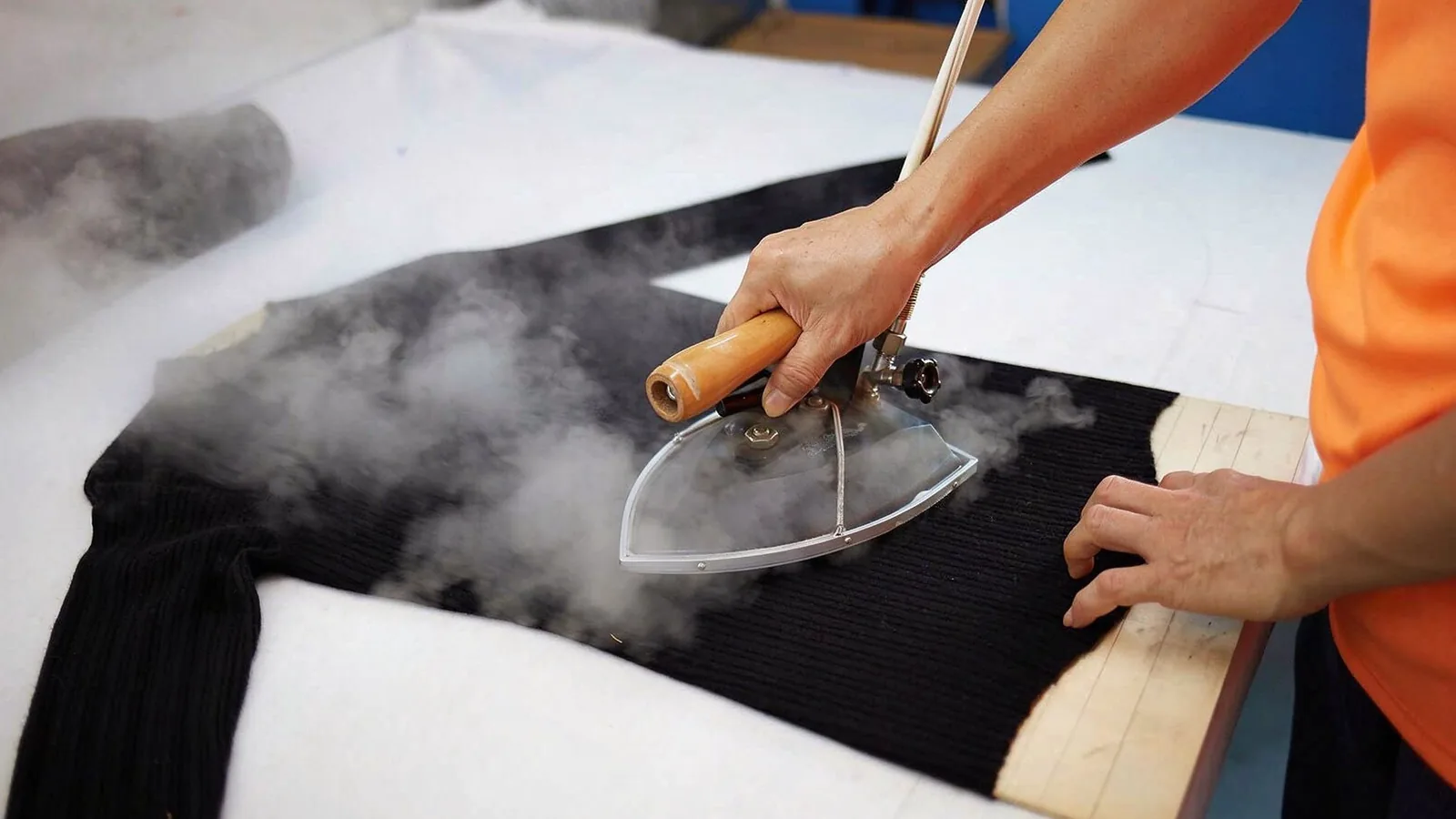
Secret 2: steam pressing on a size board
After drying, garments are pressed on a board in the correct size, and steam locks body length, chest and sleeve length while releasing mechanical tension. Properly pressed bulk usually holds wash shrinkage within ±3%.
4. Three sourcing safeguards
- Ask for a pilling test report: Martindale or ICI box pilling results, with a rating of 3.5–4 or above on a 5-point scale.
- Require a pre-production wash test: at PPS stage, ask for measurements of the washed and pressed garment, and run three standard washes on random pieces to confirm tolerance.
- Test with stock yarn: for a 50-piece run, use the factory's stock yarn — already proven in bulk for colour fastness, shrinkage and pilling — to cut the risk of an unproven new yarn.
In summary
Anti-pilling and anti-shrinkage is a system: yarn choice sets the physical ceiling for pill resistance, while washing and steam pressing lock dimensional stability and hand-feel balance. Work with a factory that owns the process and a disciplined QC system, and you remove the returns risk at the source.
About Jinya Knitwear
Still dealing with pilling, shrinkage and size deviation complaints? Jinya holds production to a strict process standard.
- Scientific washing and precise shape setting: technicians with 15+ years of experience control the milling recipe and steam pressing, with pre-production wash tests to keep shrinkage and pilling within spec.
- Full gauge & category range: 1.5GG–16GG machines; menswear, womenswear, kidswear and knit accessories.
- Low MOQ flexibility: proven stock yarn resources support a 50-piece minimum.
- Fast sampling: 3–7 day samples; 100% of the sampling fee refunded on orders of 300+ pieces of the same style.
Can pilling be fully prevented?
Not entirely, but worsted long-fibre yarn, moderate milling and anti-pilling finishes reduce it sharply.
What pill-resistance rating is acceptable?
Grade 3.5–4 or above on a 5-point scale.
What shrinkage tolerance is normal?
±3% on the washed and pressed garment.
Olivia handles operations content for Jinya, covering knitwear sourcing, product development and garment care — turning the questions buyers ask on the factory floor into practical, checkable guides.
Ms. Liu has run knitting floors for more than 20 years, overseeing yarn routing, machine programming, linking and final QC. She reviews every technical claim published here.