Custom Sweater Development: 7 Steps from Sketch to Bulk Delivery
A custom sweater runs through seven stages: tech pack review, yarn routing and swatch, sampling and PPS, bulk knitting, linking and hand-knotting, washing and steam setting, then QC, needle detection and packing. Programming and swatch calibration are one-off costs, which is why very small orders carry a higher unit price. Stock yarn cuts both lead time and MOQ.
Knits are built from yarn, not cut from cloth. A walk through the seven stages — tech pack review, programming, sampling, knitting, linking, washing and QC — that decide fit, hand-feel and delivery date.
For brand founders, overseas sourcing managers, designers and e-commerce sellers, developing a sweater is full of technical thresholds and communication gaps.
Unlike woven garments that are cut from finished fabric, knitwear is built from individual yarns: machine programming, gauge matching, intarsia or jacquard work, linking, washing and steam setting. Miss one step and you get size drift, pilling, shrinkage or a late delivery.
Here are the seven core steps that take a quality sweater from sketch to bulk delivery.
The full process at a glance
01 Tech pack review → 02 Yarn routing & swatch → 03 Sampling & PPS approval → 04 Machine knitting → 05 Linking & hand-knotting → 06 Washing & steam setting → 07 QC, needle detection & packing
Step 01: reviewing the design and tech pack
Every successful project starts with clear communication. The buyer supplies a flat sketch, Pantone shades, the intended yarn (merino, cashmere, cotton blend) and a measurement spec sheet. A technician with 15+ years of experience assesses feasibility, recommends the machine gauge (3G–16G) and structure (jersey, jacquard or intarsia), and returns a precise quote within 24 hours.
Step 02: yarn routing, programming and swatch testing
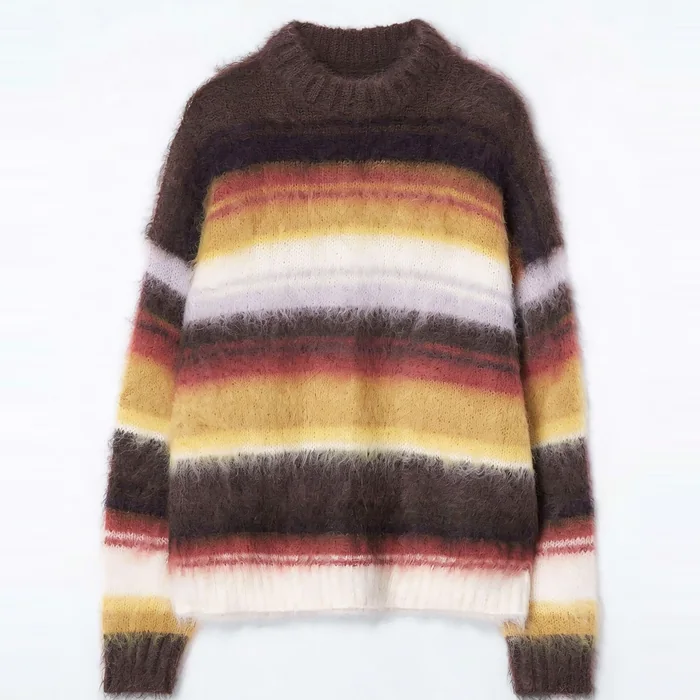
Programming and yarn routing are the soul of knit manufacturing. Front, back and sleeve panels are drawn in professional software; for colour-block or large motifs, the technician splits colour blocks, plans independent cones and yarn paths, and compiles the machine program. The goal is not only that it can be knitted — the reverse must look equally clean.
Before bulk panels, the factory knits a 10 × 10 cm swatch to measure stitch density (wales and courses) and confirm the motif is not distorted.
Step 03: sampling and PPS approval
Before bulk, sampling turns the design into something you can touch. With a mature stock-yarn library, samples can be ready in 3–7 days. The buyer checks hand-feel, colour, intarsia/jacquard detail and post-wash measurements; once approved and signed off as the pre-production sample (PPS), the style is locked for bulk scheduling.
Step 04: bulk knitting
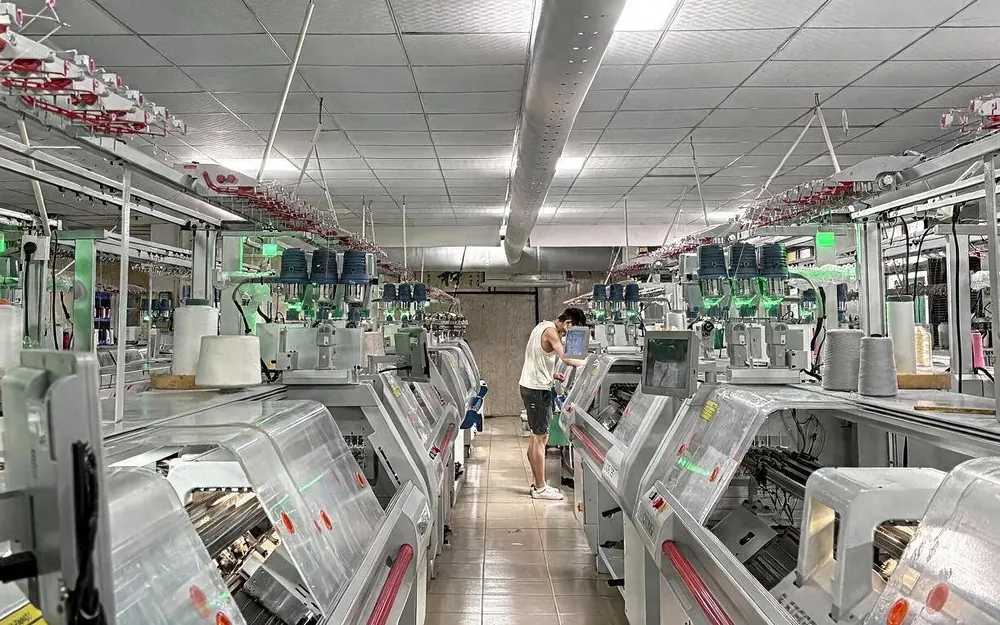
Once PPS is approved, bulk moves to the computerized flat-knitting floor. The program drives precise yarn changes at every colour boundary, row by row, producing front, back, sleeves and collar rib. Panels then pass a first inspection that rejects dropped stitches, holes and oil stains.
Step 05: linking and hand-knotting
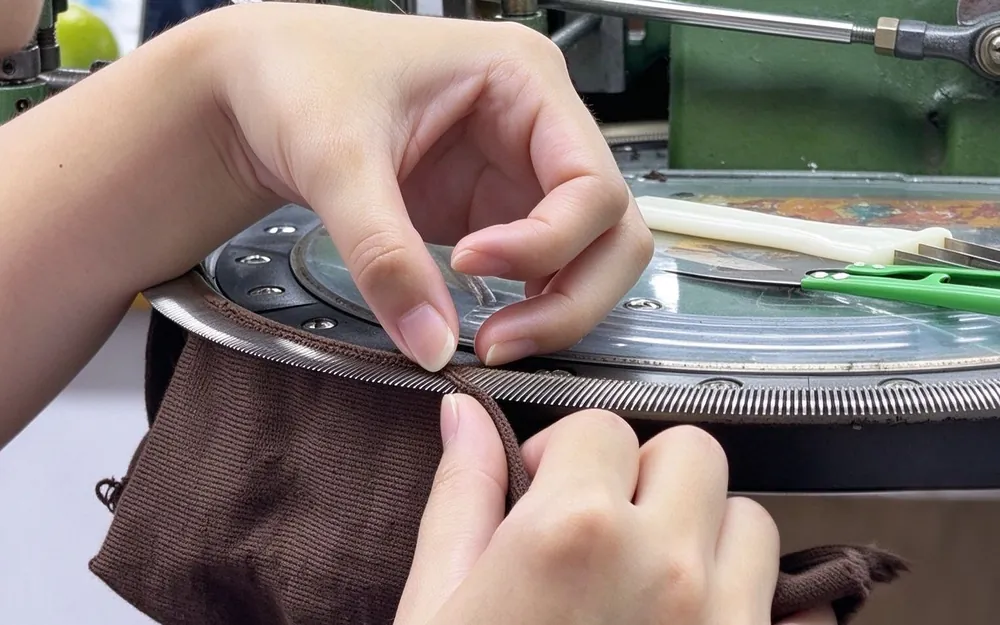
Panels are assembled in the finishing room. Linking machines join front, back, sleeves and collar stitch by stitch, keeping seams flat, concealed and elastic. For multi-colour intarsia, workers hand-knot every yarn tail at a colour boundary and tuck it into the back — preventing unraveling and keeping the inside clean against skin.
Step 06: washing, milling and steam setting
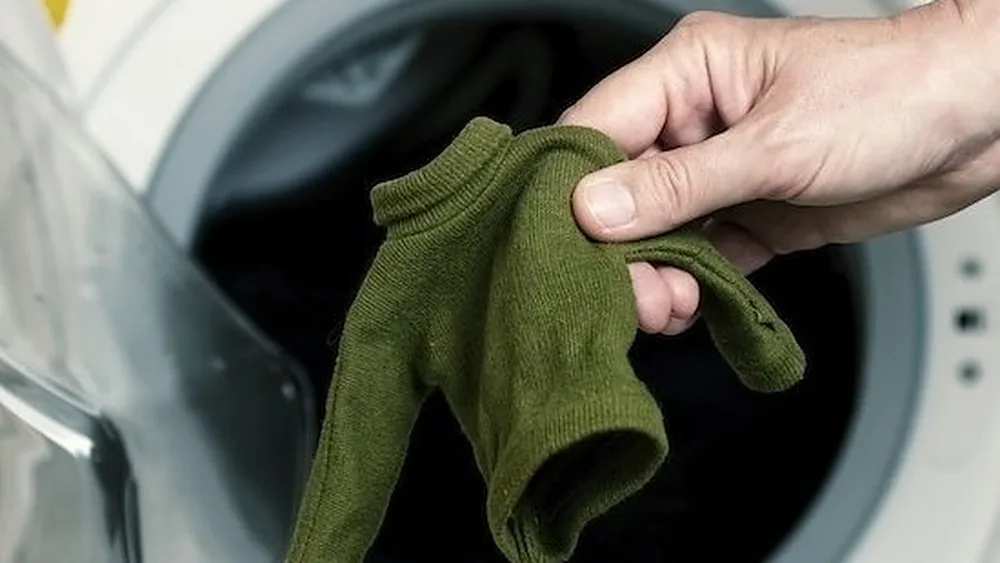
Freshly linked garments feel stiff. Washing and milling in an industrial drum with a controlled recipe releases the natural fibre's hand and halo. The garment is then dried and pressed on a board in its correct size, with steam locking body length, chest and sleeve length — keeping wash shrinkage within tolerance.
Step 07: QC, needle detection and packing
The final gate: a three-stage QC check of threads, seam strength, dimensional tolerance (±3%) and surface pilling or stray fibres; 100% needle detection to rule out broken needles; then tagging, dust bags and carton packing for the buyer's warehouse or port.
Low-MOQ advice for buyers
- Use stock yarn: for a 50-piece, low-cost test run, stock yarn avoids the dyeing small-vat fee and shortens lead time.
- Choose a factory that owns the whole process: programming, linking, washing and pressing in-house gives more consistent quality and avoids delays from outsourced hand-offs.
In summary
Making a quality sweater is a marriage of automated knitting equipment and fine handwork. Knowing these seven steps makes buyer-factory conversations sharper and safer — and a technical, detail-driven factory with small-batch flexibility makes the whole development far easier.
About Jinya Knitwear
Have a sketch or a new-season plan and need full-process manufacturing? Jinya covers yarn routing and pattern making through to bulk delivery.
- Full gauge & category range: 1.5GG–16GG computerized flat machines; menswear, womenswear, kidswear plus beanies, scarves and gloves.
- Craft depth: intarsia and jacquard handled in-house, with 15+ years of technical experience behind programming and production set-up, and every intarsia tail hand-knotted and tucked.
- Low MOQ: stock yarn resources support a 50-piece minimum for new brands.
- Fast sampling: 3–7 day samples; 100% of the sampling fee refunded on orders of 300+ pieces of the same style.
How long from sketch to bulk?
Sampling takes 3–7 days; bulk depends on quantity and yarn, typically a few weeks.
Which step takes the most time?
Yarn routing and swatch calibration, plus hand-knotting on intarsia styles.
Can small orders use the full process?
Yes — with stock yarn the minimum is 50 pieces.
Olivia handles operations content for Jinya, covering knitwear sourcing, product development and garment care — turning the questions buyers ask on the factory floor into practical, checkable guides.
Ms. Liu has run knitting floors for more than 20 years, overseeing yarn routing, machine programming, linking and final QC. She reviews every technical claim published here.