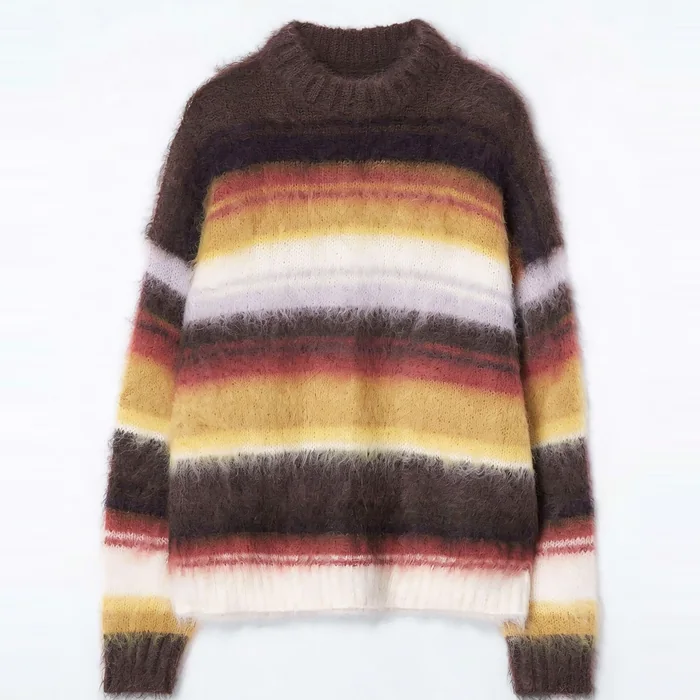
Merino vs. Cashmere vs. Cotton Blends: Choosing Yarn for AW
Merino with fibres under 19.5 μm balances warmth, durability and cost, making it the best all-round autumn/winter yarn. Cashmere is lighter and roughly 8× warmer than ordinary wool, but shorter fibres pill more and demand careful washing. Cotton blends win on cost and easy care for transitional and value lines. Blending 10–30% cashmere with merino is the usual value compromise.
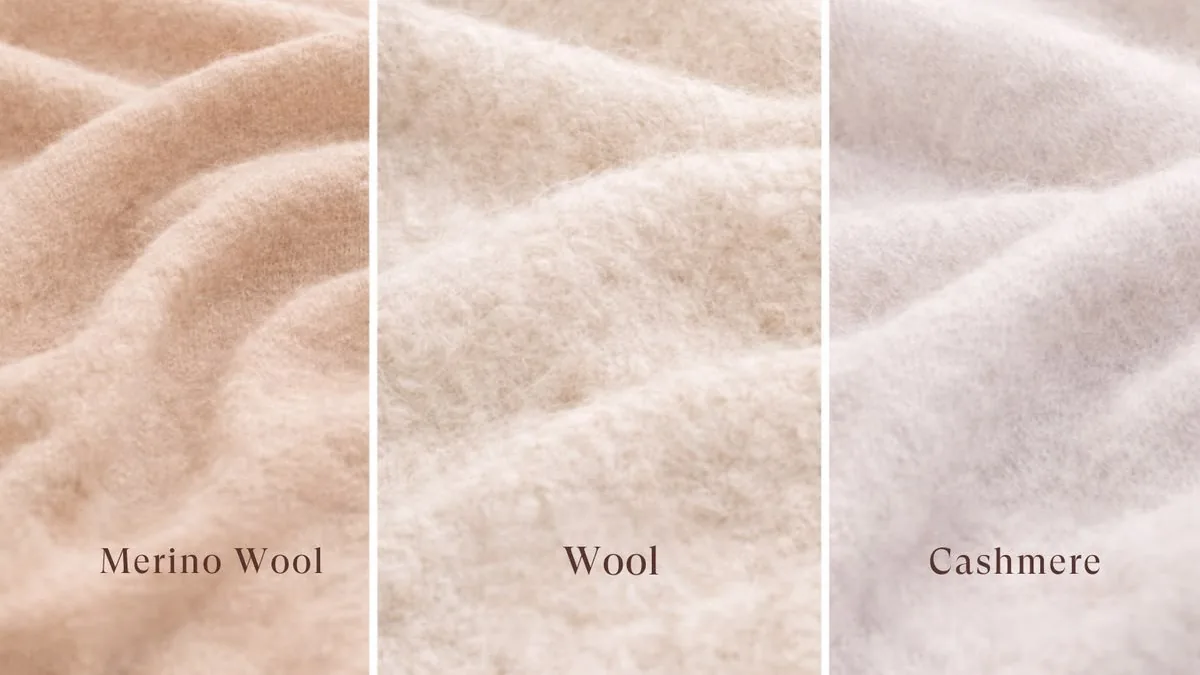
Warmth, skin feel, durability, cost and positioning — a side-by-side read on the three core autumn/winter yarns, plus three sourcing tactics to avoid costly mistakes.
In autumn/winter development, the yarn decides hand-feel, warmth, durability, cost structure and retail price.
Brand founders, designers and buyers often face the same trade-off: luxury cashmere or value-driven merino? And for a start-up or entry line, are cotton blends worth considering?
This guide compares merino wool, cashmere and cotton blends across performance, cost tiers and suitable positioning — so you can choose the right yarn and lift your brand's perceived value.
1. The three core yarns, compared
A quick side-by-side of the dimensions that matter most.
| Material | Warmth | Skin feel & comfort | Durability & pilling | Cost tier | Target customer & positioning |
|---|---|---|---|---|---|
| Merino wool | High — fine fibres trap warmth naturally | Soft and skin-friendly; most people can wear it directly | Medium to excellent — elastic and wrinkle-resistant | Medium — the value sweet spot | Accessible luxury, outdoor performance, urban commuting |
| Cashmere | Extremely high — about 8× ordinary wool | Cloud-like, ultra-luxurious, exceptionally light | Lower — short fibres need careful handling | High — top luxury | Quiet luxury, premium gifting, luxury cashmere labels |
| Cotton blends | Medium — suited to transitional and indoor wear | Cool, breathable, no prickle; allergy-friendly | High — easy-care, holds shape | Accessible — the cost-control option | Fast fashion, value e-commerce, transitional basics |
2. Deep dive and brand fit
1) Merino wool: the golden balance of performance and value
Merino's extremely fine fibres — usually below 19.5 microns, and below 17.5 for high-count worsted — overturn the old “scratchy wool” stereotype.
- Natural temperature control: excellent moisture wicking, adapting the microclimate around the body.
- Natural elasticity and wrinkle resistance: crimped fibres recover their shape.
- Strong perceived value: consumers recognise the fibre and will pay more for it.
Where it fits
For an autumn/winter hero that combines quality with everyday durability — 7G/12G sweaters, high-neck base layers, knit outerwear — merino is the best balance of quality and margin.
2) Cashmere: the shorthand for luxury and premium pricing
Cashmere is the rare down combed from the base of the goat's coat, and supply is extremely limited — a single pair of gloves can use the annual down of several goats.
- Feather-light yet extremely warm: about eight times the warmth of ordinary wool by weight.
- The ceiling of hand-feel: exceptionally fine, smooth and lustrous, with a cloud-like wrap.
- Keep in mind: shorter, weaker fibres pill more easily and demand careful washing.
Where it fits
Quiet luxury, executive gifting, premium cashmere specialists or a brand's flagship capsule — a few pieces are enough to lift the whole label.
3) Cotton blends: cost control and trans-seasonal wear
Cotton/acrylic, cotton/polyester or cotton/wool blends are the quiet weapon of small-budget and value-focused brands.
- Stable and washable: machine-washable, good pill resistance, holds shape and size.
- Skin-friendly: ideal for wool-sensitive customers.
- MOQ and cost advantage: abundant stock yarn, friendly pricing, perfect for small test runs.
Where it fits
Start-up test runs, spring/early-winter transitional pieces, kidswear, and value e-commerce brands focused on conversion.
3. Three sourcing tactics to avoid costly mistakes
- Blend for value: if 100% cashmere is too expensive, try a 10–30% cashmere/merino blend or a merino/acrylic blend. You keep a natural-fibre callout on the label while cutting material cost.
- Match yarn to gauge: 12G/14G fine gauge suits high-count merino or pure cashmere for light base layers; 3G/5G chunky knits are better in cotton or coarse wool blends, avoiding the cost of cashmere in heavyweight styles.
- Use the factory's stock yarn to lower MOQ: custom-dyed merino or cashmere carries high dye-lot minimums. Choosing stock yarn can bring the order down to 50 pieces and shorten lead time by 2–3 weeks.
In summary
Choosing a yarn for autumn/winter comes down to your customer profile and pricing strategy.
- Value and quality reputation → merino wool
- Luxury hand-feel and premium markup → cashmere
- Cost control and low-barrier testing → cotton blends
About Jinya Knitwear
Still weighing yarn choice and MOQ for the new season? Jinya supports the whole path from yarn selection to bulk delivery.
- Full material range: Merino, cashmere, cotton blends and premium blends, with technical advice on each.
- Full gauge coverage: 1.5GG–16GG computerized flat machines.
- Stock yarn & low MOQ: Abundant stock yarn enables a 50-piece minimum so new brands can validate the market fast.
- Full category range: Menswear, womenswear, kidswear and knit accessories.
- Fast sampling & refund: 3–7 day sampling; sampling fee refunded 100% on 300+ pieces of the same style.
How do I choose among the three?
Merino for value and performance, cashmere for luxury, cotton blends for cost control.
What cashmere blend ratio is practical?
10–30% cashmere with merino is the common value compromise.
Do cotton blends pill?
Less than wool, but a high synthetic share increases static rather than pilling.
Olivia handles operations content for Jinya, covering knitwear sourcing, product development and garment care — turning the questions buyers ask on the factory floor into practical, checkable guides.
Ms. Liu has run knitting floors for more than 20 years, overseeing yarn routing, machine programming, linking and final QC. She reviews every technical claim published here.