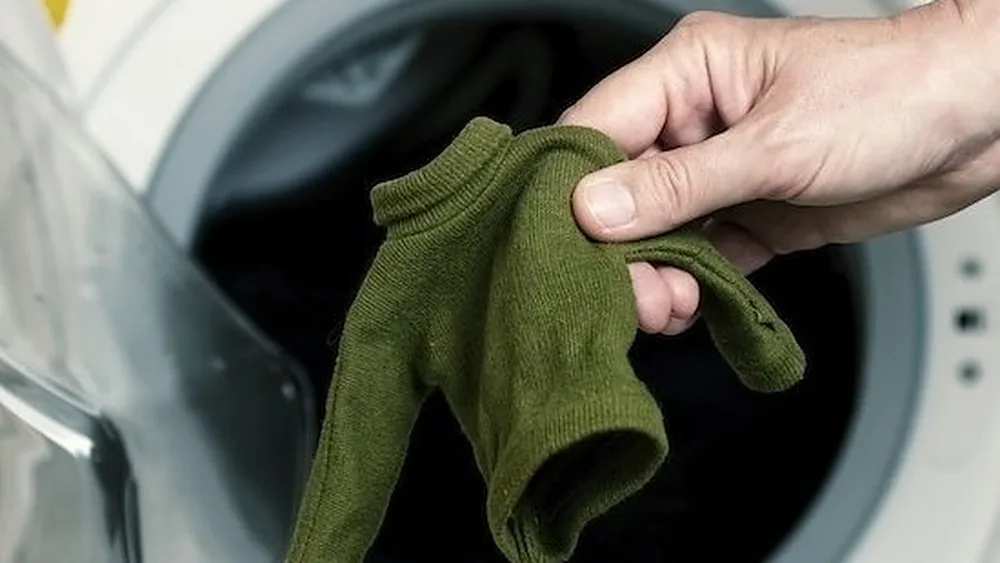
Why Is Knitwear MOQ Higher Than Woven Apparel?
Knitwear MOQ is high because production starts from yarn, not fabric: a custom shade needs a 30–50 kg dye lot, and each style carries one-off programming and swatch costs. Hand-knotting intarsia and linking add labour, and tiny wash batches cannot hold tolerances. Stock yarn, one yarn across several styles, and two or three colours and sizes usually bring MOQ down to 50–100 pieces.
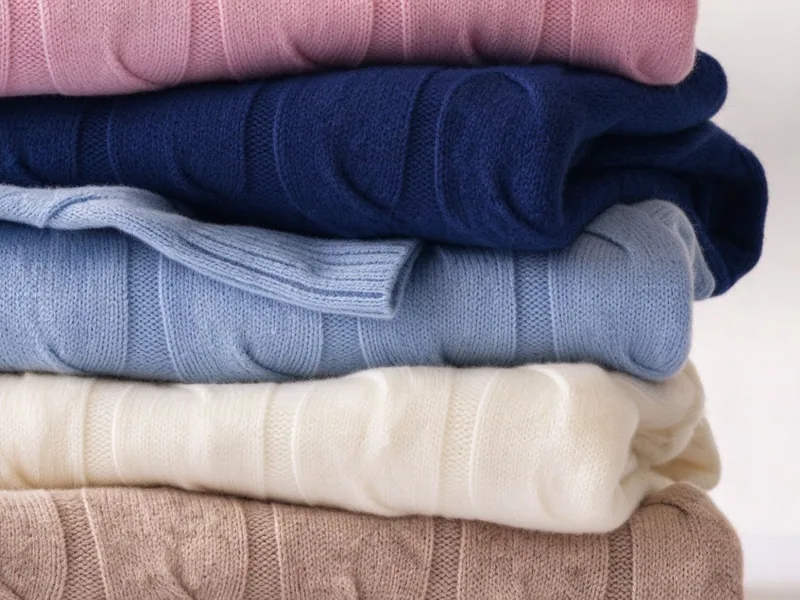
Yarn dye-lot minimums, machine programming, hand-knotting and washing batches — the real reasons knitwear MOQs sit higher, plus four ways small brands can lower the bar.
In apparel sourcing, buyers often ask: why is it easy to order 100 woven shirts or trousers, while a factory hesitates on 100 sweaters — or quotes a price that seems absurd?
It is not the factory inflating the threshold. It comes down to how knitwear and woven apparel differ in raw material form, construction and machine set-up. Here is the breakdown — plus four practical ways new brands can lower the entry bar.
1. Raw material: starting from yarn vs starting from fabric
The most fundamental difference is where manufacturing begins.
| Dimension | Woven apparel | Knitwear |
|---|---|---|
| Starting point | Fabric (finished cloth) | Yarn (not yet knitted into cloth) |
| Forming process | Cutting → sewing | Yarn goes through five fine knitting and linking steps |
| Minimum material order | Fabric mill's cut length (e.g. 100 m) | Yarn mill's dye lot (e.g. 30–50 kg) |
The yarn mill's dye-vat minimum
Woven apparel uses fabric, and the fabric market carries plenty of stock cloth — even a few dozen metres can be cut for sampling.
A knitted sweater starts from individual yarns. If a client specifies a particular composition (100% merino, cashmere blend) or a Pantone shade, the factory must order dyed yarn from a spinner.
Yarn dyeing uses industrial dye vats. Even the smallest vat has a strict minimum batch, so the raw-material threshold alone already sets the production volume for a custom color.
2. Five precision steps from yarn to garment
Woven production centres on cutting and sewing; flatlock and overlock machines adjust quickly. A quality sweater, by contrast, passes through five tightly controlled stages — and every set-up, trial and manual step adds cost that small batches must absorb.
01 Pattern drawing & yarn routing → 02 Machine knitting & tuning → 03 Hand-knotting yarn ends (intarsia) → 04 Linking & seaming → 05 Washing & milling → 06 Pressing & shape setting
01. Pattern drawing and yarn routing
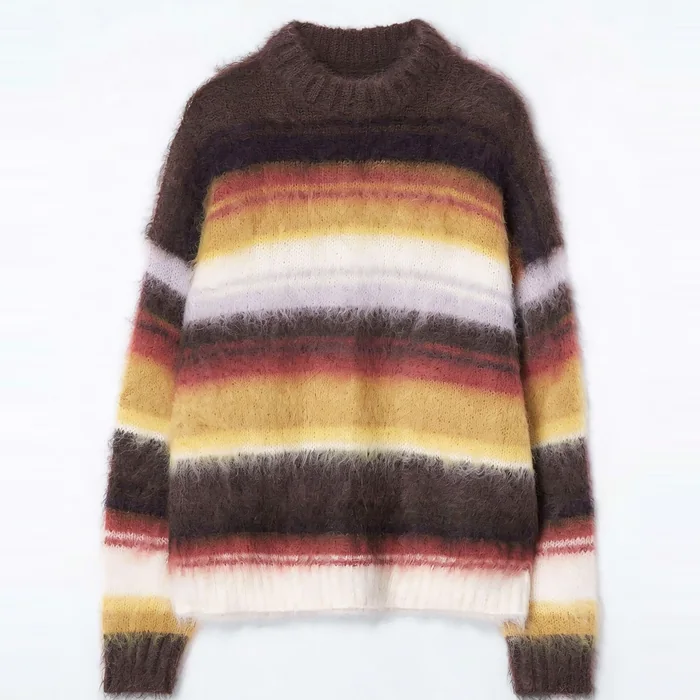
Front, back and sleeve panels are drawn precisely in professional design software; a technician with 15+ years of experience then breaks the artwork into colour blocks, plans an independent yarn cone and yarn path for each block, and compiles the computerized flat-knitting program. The goal is not only that it can be knitted — the reverse side must look just as clean. Beautiful on both sides.
02. Machine knitting and tuning
Once the routing data is loaded, the machine follows its preset yarn-change commands and changes yarn precisely at every colour boundary, row by row. Before sampling, we knit a test swatch, measure dimensions and stitch density, and calibrate the motif scale — only then do we move into sampling and bulk.
03. Hand-knotting yarn ends (for multi-colour intarsia)
For complex graphics or bold colour-block intarsia, this step is critical. Intarsia changes yarn frequently between colour zones, so after knitting every boundary leaves a short tail on the reverse. Workers hand-knot each tail and tuck the knot discreetly into the back — preventing unraveling and keeping the inside clean and comfortable against skin.
04. Linking and seaming
Front, back, sleeves and collar are linked stitch by stitch on a linking machine, keeping seams flat, natural and concealed.
05. Washing and milling
Natural fibres — wool, cashmere, cotton-linen — must be washed and milled after linking to release hand-feel, wake up the halo and improve pill resistance.
06. Pressing and shape setting
After drying, garments go through steam pressing and shape-setting forms. Against the spec sheet, the presser locks body length, chest and sleeve length with precise steam and templates, so the garment sits flat and holds its silhouette.
3. Why low volumes push unit cost up
Looking at the five stages above, the cost pressure of a small order becomes obvious.
- High fixed set-up cost: pattern routing (01) and swatch calibration (02) are one-off investments. On a 20–30 piece order, hours of programming and swatch waste spread across very few units.
- Labour-heavy handwork (especially intarsia): hand-knotting (03) and linking (04) are manual. The more complex the intarsia, the longer the knotting and tucking — and small batches carry that labour at full weight.
- Wash-batch consistency: washing relies on controlled recipes (temperature, auxiliaries, time). At 10–20 pieces the friction and chemical concentration inside the drum are hard to control, causing dimensional drift. Only at 50+ pieces does washing stay consistent.
4. Four ways brands can lower knitwear MOQ
If you are a new brand, DTC seller or independent designer with a limited budget for a first test run, these four supply-chain tactics help you work with a knitwear factory at lower MOQ.
1) Use the factory's stock yarn library
The most effective lever. Factories stock common compositions — combed cotton, anti-pilling acrylic, faux cashmere, merino — in ready colours. Stock yarn skips the dye house, and MOQ can often drop from 300 pieces to 30–50.
2) One yarn, several styles or colours
Order a single yarn composition and count, then develop several styles from the same lot — a crewneck cardigan, a V-neck sweater, a beanie. You satisfy the dye-lot minimum while broadening the range.
3) Simplify size and colour ratios
At 50 pieces, keep it tight: one or two core colours (black, oatmeal) rather than four or five, and two or three core sizes (S/M/L or one oversized fit).
4) Consider whole-garment / seamless knitting
For premium positioning, ask whether the factory runs seamless whole-garment machines. One yarn in, one garment out — far less linking work, better next-to-skin comfort, and faster response for small runs.
In summary
Knitwear MOQ is high because of yarn dye-lot minimums and the five tightly controlled forming stages — programming, hand-knotting, linking and washing. Choose a source factory that understands the technique and holds stock yarn, combine stock-yarn development with concentrated colours and sizes, and a small brand can still start at 50–100 pieces.
About Jinya Knitwear
Looking for a responsive source factory at a fair price? Jinya offers one-stop knit manufacturing from programming to bulk.
- Full gauge coverage: 1.5GG–16GG computerized flat machines — heavyweight coarse knits and fine-gauge worsted alike.
- Full category range: Menswear, womenswear, kidswear, plus beanies, scarves and gloves.
- Low MOQ flexibility: 50-piece minimum using readily available stock yarn.
- Fast sampling: Samples in 3–7 days.
- Sampling fee refund: 100% refunded on orders of 300+ pieces of the same style.
What is the minimum order for knitwear?
With stock yarn, 50 pieces per style. A custom Pantone shade is limited by the 30–50 kg dye lot, which works out to roughly 60–100 pieces.
Why is knitwear MOQ higher than woven?
Knitwear starts from yarn, so every style needs a dye lot plus one-off programming and swatch work, and linking or intarsia adds handwork that does not shrink with volume.
How can a small brand lower MOQ?
Use the factory's stock yarn, run several styles from one yarn, and keep the first run to two or three colours and sizes.
How long does sampling take?
Three to seven days with stock yarn, plus shipping.
Olivia handles operations content for Jinya, covering knitwear sourcing, product development and garment care — turning the questions buyers ask on the factory floor into practical, checkable guides.
Ms. Liu has run knitting floors for more than 20 years, overseeing yarn routing, machine programming, linking and final QC. She reviews every technical claim published here.