Weight and Gauge: What Really Decides a Sweater's Thickness and Price
Gram weight sets yarn cost; gauge sets machine time — and fine gauge is usually the pricier one. A 700 g 3G sweater uses about 3.5× the yarn of a 200 g fine base layer, while a 16G panel can take 45–60 minutes to knit versus about 20 for 3G. Typical bands: 150–250 g at 12G–16G, 300–450 g at 7G–9G, 500–900 g+ at 3G–5G.
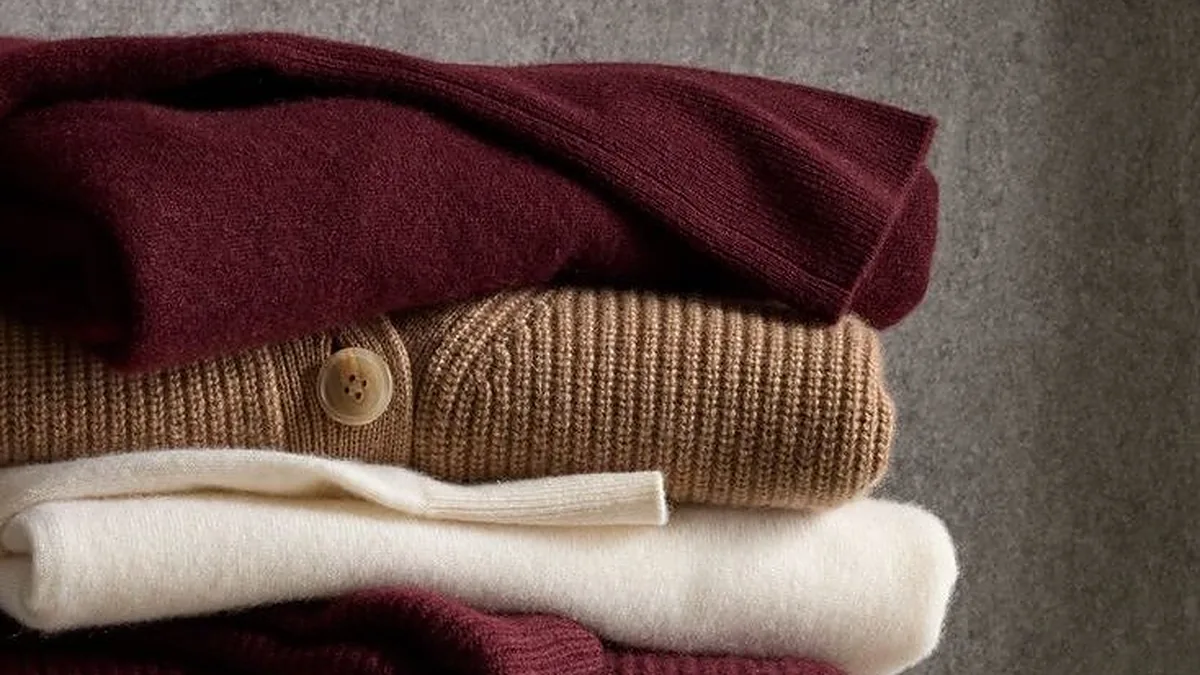
Why does one sweater cost $20 and another $100? Gram weight drives yarn cost, gauge drives machine time — and fine gauge is often the more expensive one.
In sourcing, buyers and consumers ask the same two questions: why does one sweater cost $20 and another $100? And why does a thick-looking sweater feel light and not warm, while a heavy one does not look bulky at all?
The answers sit in two basic knit-engineering metrics: Gram weight and gauge. Together they set thickness, hand-feel, warmth and shape retention — and they are the hidden drivers of production cost and ex-works price.
1. What are gauge and gram weight?
Gauge: how fine the fabric is
Gauge is the number of needles per inch (2.54 cm) on the needle bed.
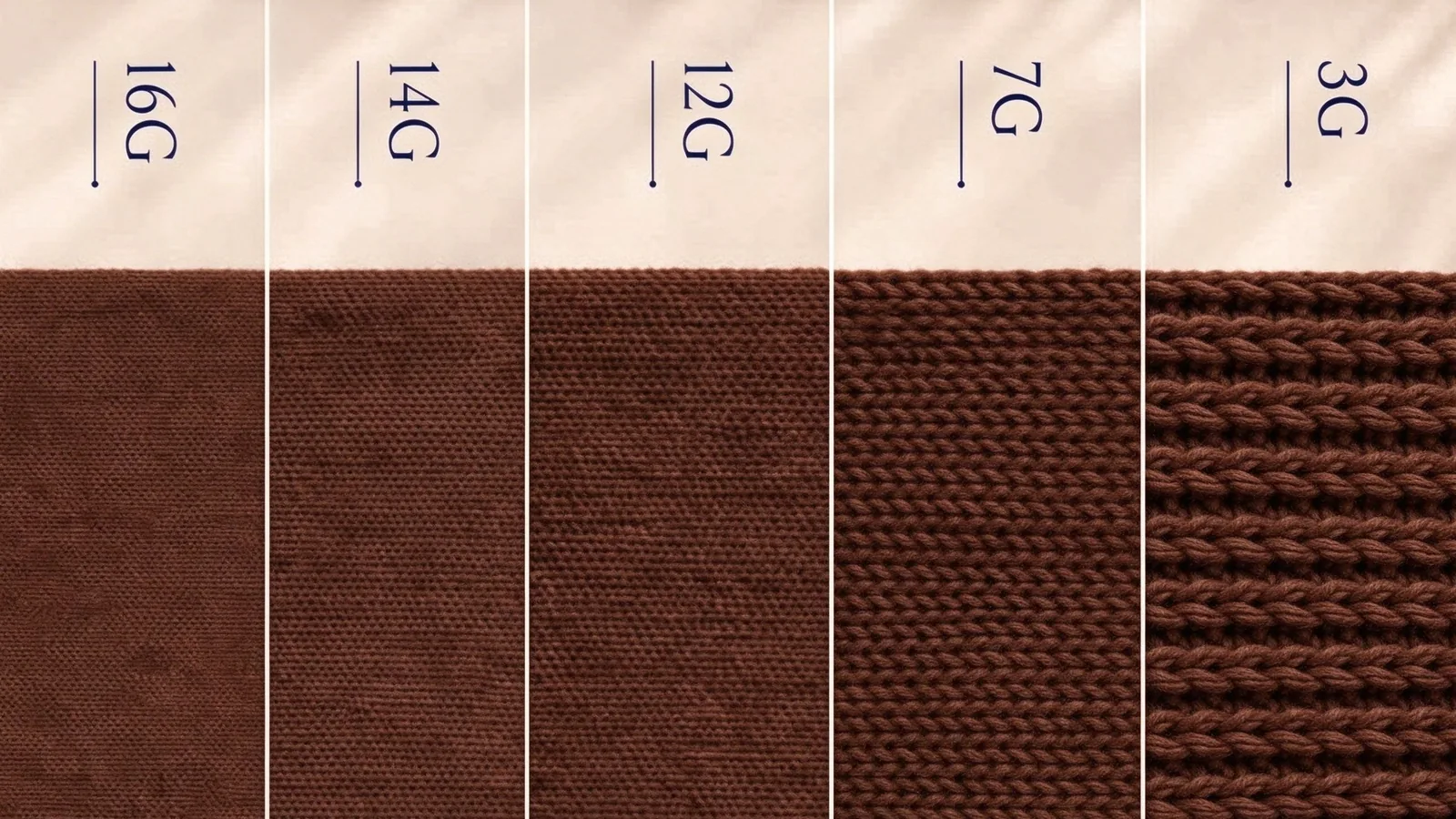
- Low gauge / coarse (3G–5G): only 3–5 needles per inch. Large stitch openings require thicker or plied yarn, giving a rugged, three-dimensional look.
- Medium gauge (7G–9G): balanced stitch size — the workhorse gauge for autumn/winter, combining body with a quality feel.
- High gauge / fine (12G–16G): 12–16 fine needles per inch, so only fine high-count yarns work. The surface is flat like cloth, light and fluid.
Gram weight: how much yarn a garment uses
Gram weight is the actual weight of one finished garment at standard moisture regain, in grams.
- Light (150–250 g): mostly 12G–16G spring/summer and transitional base layers, knit polos and thin cardigans.
- Regular (300–450 g): mostly 7G–9G classic crewnecks and V-necks.
- Heavyweight (500–900 g+): mostly 3G–5G cable outerwear, heavy coats or oversized hooded knits.
2. How gauge and weight combine to create thickness
Thickness is not one variable — it is gauge and weight working together. Low gauge + high weight gives a chunky retro outerwear piece; medium gauge + medium weight gives a versatile autumn/winter staple; high gauge + low weight gives a fine, flat, next-to-skin layer.
That is why “thick but light” or “thin but heavy” happens: fibre density differs (pure cashmere is lighter and warmer than combed cotton at the same 12G), and stitch structure matters — a 7G rib or double jacquard can weigh 30–50% more than a plain jersey at the same gauge.
3. Why these two numbers set the price
A factory's price is essentially material cost (yarn) plus processing cost (machine time and handwork). Gauge and weight drive both.
1) Weight drives yarn cost
Yarn is bought by the kilogram, so unit yarn cost = garment weight (including wastage) × price per gram. A 700 g 3G sweater uses about 3.5× the yarn of a 200 g fine base layer — even in an ordinary blend, the material cost rises steeply.
2) Gauge drives machine time — and fine gauge costs more
Many assume thicker means pricier. The opposite is often true: 12G–16G fine gauge knits cost more to make than coarse ones.
- Machine speed: a 16G panel needs far more needles and rows than 3G. A 3G panel may knit in 20 minutes; a 16G ultra-fine panel can run 45–60 minutes.
- Equipment and skill: 14G/16G machines are expensive and demand strict temperature, humidity and programming skill, with higher risk of dropped stitches and holes — so the hourly rate is higher.
- Linking and finishing: coarse gauge links quickly; fine gauge demands sharp eyes and high skill, so linking costs more. Intarsia adds hand-knotting labour on top.
4. Choosing gauge and weight for your range
- Coarse and heavy (3G/5G) for impact and markup: a statement piece with cables or oversized streetwear shapes, where 600 g+ gives an immediate sense of value.
- Medium gauge (7G/9G) for volume and value: balanced weight and knitting efficiency, the lowest-risk autumn/winter bestseller.
- Fine gauge (12G/16G) for quality and trans-seasonal: base layers, business polos and air-conditioned cardigans, paired with high-count merino or silk-cotton to justify a premium.
- For a 50-piece test run, use stock yarn: whatever gauge or weight you choose, stock yarn avoids the small-vat surcharge of dyeing a dedicated lot.
In summary
Weight (g) sets how much yarn a sweater uses — its material base. Gauge (G) sets how much machine time and craft it consumes — its technical threshold. Understand how they work together, work with a factory that has the right machines and cost discipline, and you can build a bestseller that is both high quality and profitable.
About Jinya Knitwear
Still working out gauge choice, weight calculation and cost control for the new season? Jinya offers technical assessment and value-driven manufacturing.
- Full gauge 1.5GG–16GG: technicians with 15+ years of experience calculate yarn consumption and stitch density, so bulk arrives at the specified weight and hand-feel.
- Stock yarn and low MOQ: 50-piece minimum with readily available stock yarn, avoiding the small-vat surcharge.
- Full category range: menswear, womenswear, kidswear, plus beanies, scarves and gloves.
- Fast sampling: 3–7 day samples; 100% of the sampling fee refunded on orders of 300+ pieces of the same style.
Which matters more for price, weight or gauge?
Both: weight drives yarn cost, gauge drives machine time.
Why is fine gauge more expensive to knit?
More needles and rows: a 16G panel can take 45–60 minutes versus about 20 for 3G.
How do I estimate yarn cost per piece?
Garment weight (plus wastage) × yarn price per gram.
Olivia handles operations content for Jinya, covering knitwear sourcing, product development and garment care — turning the questions buyers ask on the factory floor into practical, checkable guides.
Ms. Liu has run knitting floors for more than 20 years, overseeing yarn routing, machine programming, linking and final QC. She reviews every technical claim published here.