3G vs. 7G vs. 12G: Which Gauge Fits Your Brand?
3G is the heavyweight statement gauge — 500–800 g, deep cables, streetwear and vintage outerwear. 7G is the industry workhorse: balanced thickness, best pattern rendering at the lowest risk. 12G–16G is fine gauge for lightweight, flat, next-to-skin knits in high-count merino or cashmere. Pick by brand positioning and season, then confirm stock yarn availability in that gauge.
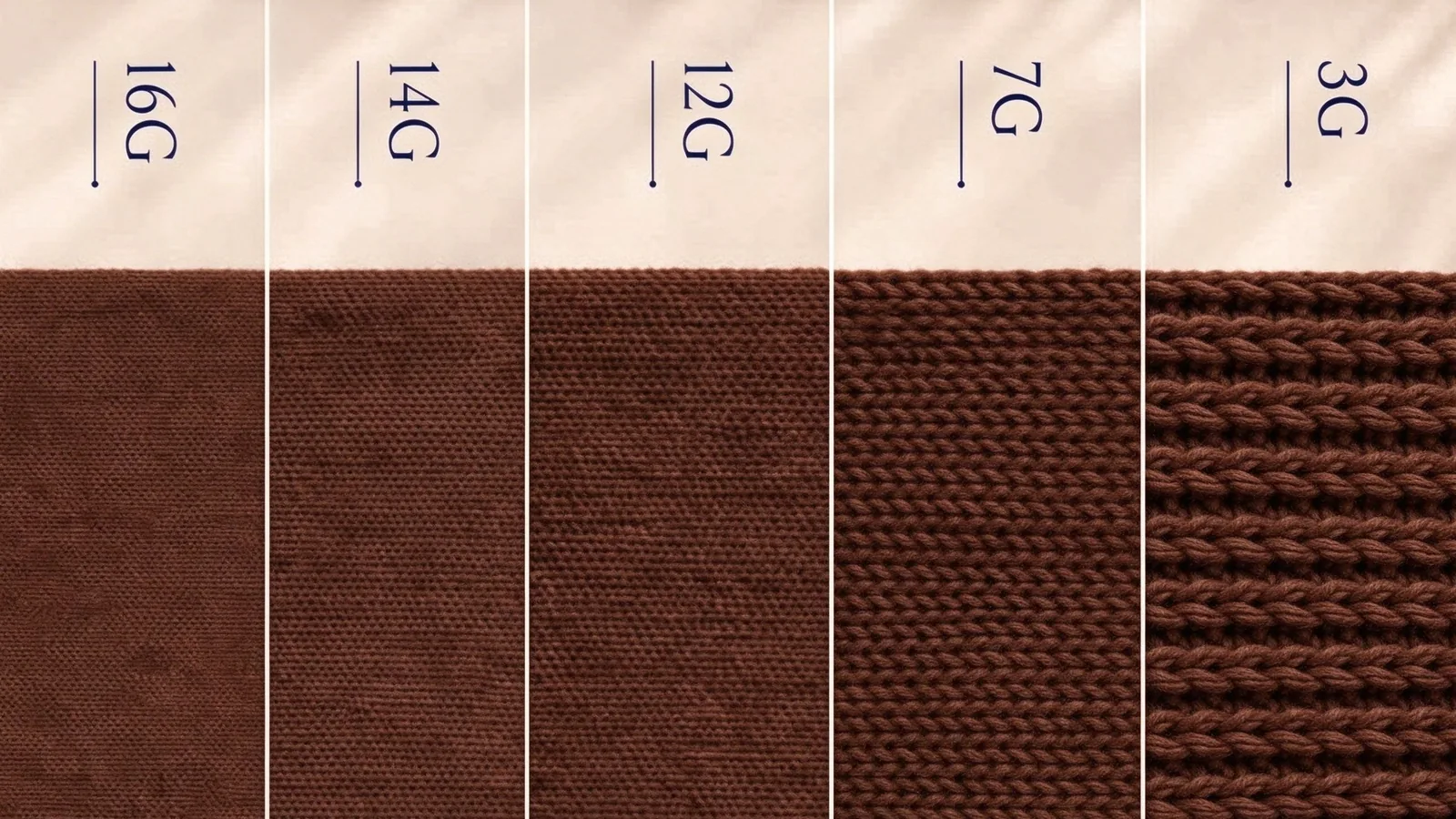
Coarse, medium or fine: how 3G, 7G and 12G decide weight, hand-feel, style and cost — and how to pick the right one for your next collection.
In knitwear design and sourcing, one core parameter decides thickness, hand-feel, visual style and production cost: the gauge — commonly shortened to “G”.
Brand founders, designers and new buyers often ask: what is the real difference between 3G, 7G and 12G? Why does the same style feel and cost completely different once the gauge changes? And which gauge should a first collection use?
This guide breaks down the logic and style of 3G, 7G and 12G, and helps you choose the right gauge for your market position.
1. What is gauge?
On a knitting machine, gauge is the number of needles per inch (2.54 cm) on the needle bed.
- Lower number (e.g. 3G): fewer needles per inch, larger stitch openings, thicker yarn — panels come out substantial and rugged.
- Higher number (e.g. 12G, 14G): more needles per inch, very fine stitches, finer yarn — panels come out light and refined.
Quick rule of thumb
The lower the gauge, the heavier and coarser the knit; the higher the gauge, the finer and more refined it becomes.
2. 3G vs. 7G vs. 12G at a glance
Here are the key parameters and typical applications side by side.
| Gauge type | Typical gauge | Yarn thickness | Look & hand-feel | Core styles | Brand positioning |
|---|---|---|---|---|---|
| Coarse | 3G (3–5 needles) | Very thick / plied rove | Heavyweight, rugged, strongly three-dimensional, warm and retro | Aran cable sweaters, chunky cardigans, heavy outerwear | American vintage, streetwear, outdoor casual |
| Medium | 7G (7–9 needles) | Medium thickness | Full-bodied with balanced stretch, highly practical | Classic crew/V-neck sweaters, hooded knits, jacquard and intarsia | Fast fashion, urban casual, accessible luxury |
| Fine | 12G (12–14 needles) | Fine / high-count worsted | Smooth, flat, light, fluid and close to the body | Spring base layers, high-neck cashmere, knit shirts and polos | Business formal, premium cashmere, quiet luxury |
1) 3G: heavyweight retro and street-ready structure
3G is the classic coarse, heavyweight gauge. The stitch definition is bold, with strong three-dimensional texture — classic cables, rope twists, fisherman stitches. The garment is heavier and exceptionally warm, ideal as an outerwear layer in autumn and winter.
If your brand plays in Amekaji vintage, American streetwear, outdoor workwear or hand-crafted cable collections, 3G is the natural choice for a statement piece.
2) 7G: the golden balance and all-rounder
7G is the industry's most classic and widely used mid-gauge. It balances the structure of coarse knits with the comfort of fine ones — moderate thickness, good hand-feel and warmth, the most forgiving autumn/winter weight.
On computerized flat machines, 7G renders patterns, intarsia and colour blocking exceptionally well, with high knitting efficiency and balanced cost.
For a first autumn/winter hero sweater, a unisex classic, or a graphics-heavy jacquard, 7G is the lowest-risk, highest-acceptance choice.
3) 12G: quiet luxury and a premium next-to-skin feel
12G represents the threshold of fine knitting. The surface is smooth, with almost no visible needle openings; it feels soft, light and fluid, and layers under a blazer without bulk.
It demands better fibre — high-count merino, cashmere or silk-cotton blends — which is exactly what gives it a premium look.
Business commuting, Nordic minimalism, premium cashmere lines or trans-seasonal spring knits: 12G instantly lifts perceived value.
3. Three sourcing tips when choosing a gauge
1) Consider yarn consumption and cost
3G sweaters use a lot of yarn (typically 600–900 g or more), so material cost per piece is high even if the yarn is inexpensive. 12G uses less yarn (200–300 g), but needs finer, pricier yarns and longer machine knitting time.
2) Consider season and wearing occasion
- Spring/autumn and office: plan 12G / 14G base layers and fine cardigans first.
- Deep winter and outdoor: plan 3G / 5G warm heavyweight styles.
- All-season and gifting: plan 7G / 9G classic basics.
3) Ask the factory about stock yarn
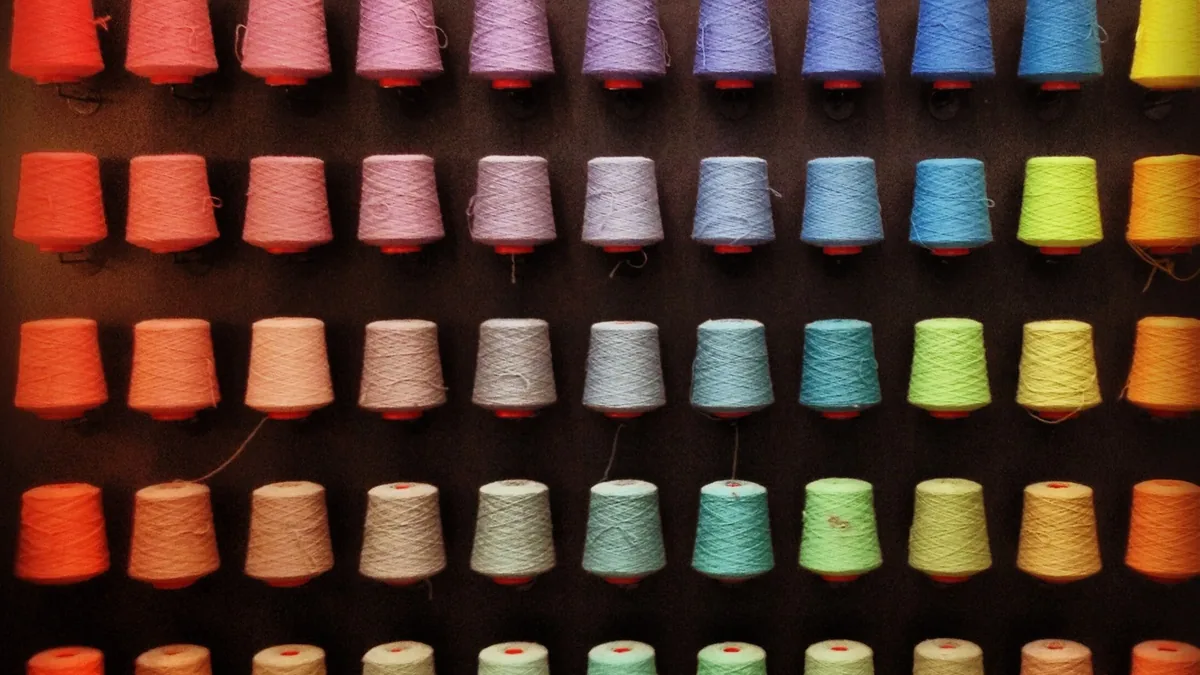
Each gauge needs a different yarn count. For low-MOQ runs, ask which stock yarns the factory already holds for that gauge — it avoids custom dyeing of coarse or fine yarns and the minimums that come with it.
In summary
There is no absolute best gauge — only the one that matches your brand's style and your customer's wearing occasions.
- Heavyweight retro, streetwear impact → 3G
- Classic, versatile, pattern-rich → 7G
- Light, close-fitting, premium → 12G
About Jinya Knitwear
Need a factory that genuinely runs every gauge? Jinya knits from 3G cables to 16G ultra-fine cashmere.
- 1.5GG–16GG coverage: A complete computerized flat-knitting line spanning coarse and ultra-fine gauges.
- Full category range: Menswear, womenswear, kidswear and knit accessories.
- Flexible low MOQ: 50-piece minimum with stock yarn.
- Fast sampling: Samples in 3–7 days.
- Sampling fee refund: 100% refunded on 300+ pieces of the same style.
How do I choose between 3G, 7G and 12G?
3G for statement outerwear, 7G for volume classics, 12G for light next-to-skin knits.
Why is 7G the most common?
Balanced thickness, excellent pattern rendering and controllable cost.
What yarn does 12G need?
High-count yarns such as 2/48 or 2/60 Nm merino or cashmere.
Olivia handles operations content for Jinya, covering knitwear sourcing, product development and garment care — turning the questions buyers ask on the factory floor into practical, checkable guides.
Ms. Liu has run knitting floors for more than 20 years, overseeing yarn routing, machine programming, linking and final QC. She reviews every technical claim published here.