Coarse Cable Knitwear (3G–7G): History, Technique and Production Challenges
Cables are physical stitch crossings: one group of needles is transferred while another crosses through. 3G–5G creates deep, heavy cables at 500–800 g per piece; 7G keeps the line clearer without bulk. Three production risks dominate — yarn breakage and needle damage at the crossing, sagging from high yarn weight, and bulky linking — solved by programming buffers, board setting and coarse-gauge linking machines.
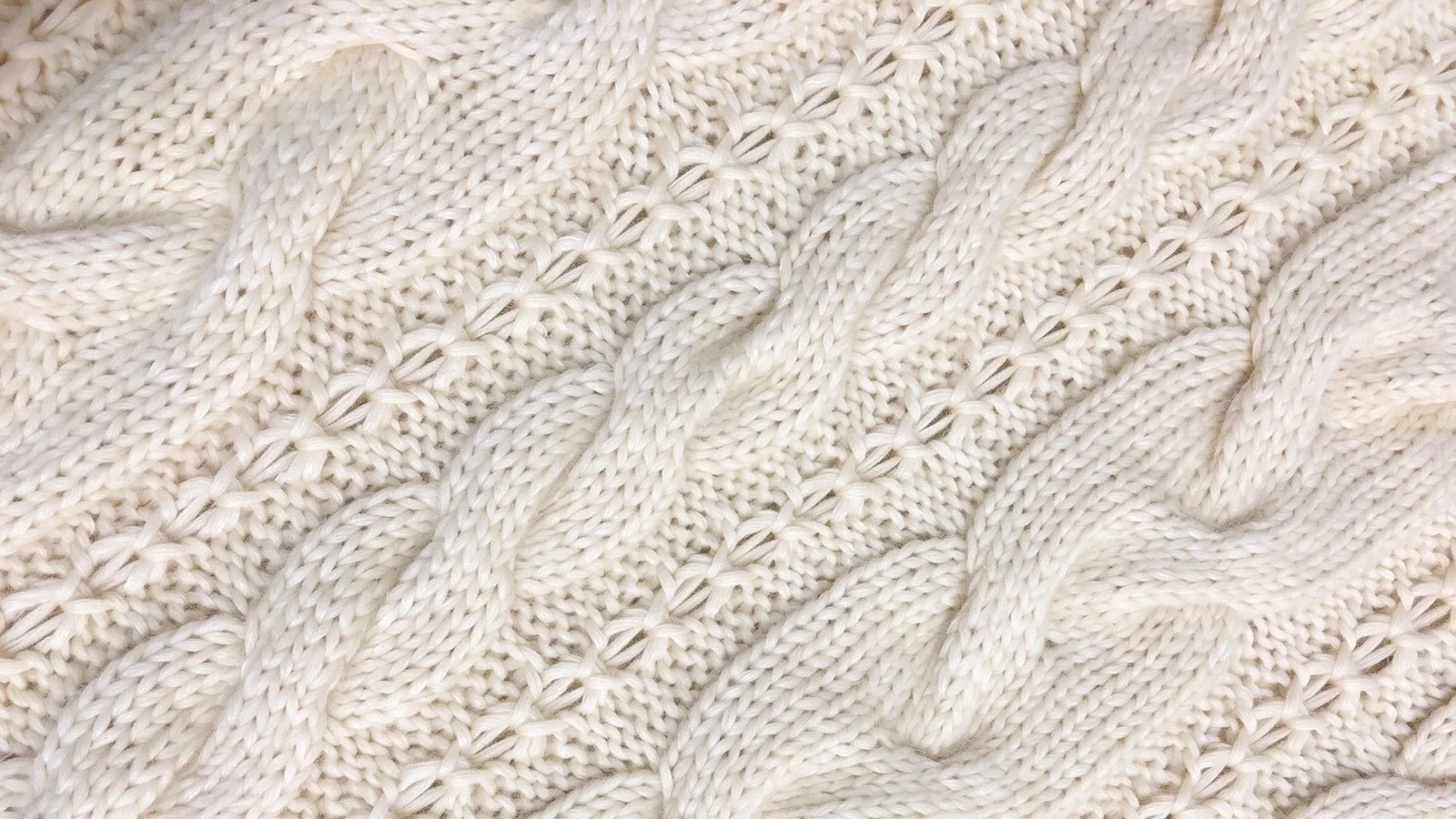
From Aran fishing sweaters to statement outerwear — how cables are physically crossed on a flat machine, and the three bottlenecks factories face on 3G–7G styles.
Few stitches have stayed at the top of autumn/winter bestseller lists for a century the way the cable knit has. From the Aran sweater to preppy Americana and today's heavyweight statement outerwear, 3G–7G cable knits sell on three-dimensional texture, a substantial wrap and serious warmth.
But for brand founders and sourcing managers, cables are also one of the hardest categories to produce and to price. This guide covers the history, the machine technique, and the three bottlenecks factories face.
1. A century of cable knit: from fishing gear to fashion classic
Coarse cable knits trace back to the late 19th century and the Aran Islands off Ireland's west coast.
- Born of practicality: fishermen's wives knitted heavy sweaters from undyed, greasy wool. The natural lanolin made them water-resistant, and the weight kept fishermen warm in rough weather.
- Symbols with meaning: cables for fishing luck and safe passage, trellis for the stone field boundaries, honeycomb for hard work and harvest.
- Into fashion: in the 1950s Aran sweaters appeared in Vogue, then spread through Hollywood and Ivy League campuses to become a global autumn/winter staple.
2. How a flat machine physically twists a cable
In knit engineering, a cable is simply a stitch crossing: needles swap positions, and the yarn follows.
Gauge choice
- 3G–5G (heavyweight): large stitch openings need high-ply coarse yarn (3-ply, 5-ply). The cable is deeply sculpted and the garment typically weighs 500–800 g+.
- 7G (medium-coarse): finer stitches keep the cable line clear without excess bulk — ideal for city outerwear or under a trench.
How the cross is made
To knit a cable, the machine temporarily transfers one group of stitches (say three needles of group A) to the front or back bed, lets group B cross through, then returns group A. That physical twist and overlap is what creates the rope effect on the face.
3. Three production bottlenecks
Classic as they look, cables are demanding on the machine, the program and the finishing line.
1) Yarn tension and needle breakage at the crossing
On 3G/5G heavy cables, thick yarn and high tension peak at the moment of a multi-needle cross (4×4 or 6×6), risking yarn breaks, dropped stitches and even needle breakage that scraps the panel.
The fix: programming skill. Experienced technicians add a loosen/tuck course before the cross and control racking speed so the yarn passes the needles smoothly.
2) High yarn consumption and sagging
Because yarn crosses and overlaps, cables use 30–50% more yarn than a plain knit at the same gauge. Heavy garments pulled by their own weight during washing or hanging can stretch in length and narrow at the chest.
The fix: dedicated blocking boards and flat drying at the washing and steam-setting stages, releasing yarn stress and holding post-wash shrinkage within ±3%.
3) Linking thick, uneven edges
Cable panels are thicker at the edges and undulating, so seams can look bulky. Poorly linked shoulders and armholes feel lumpy and rub against the body.
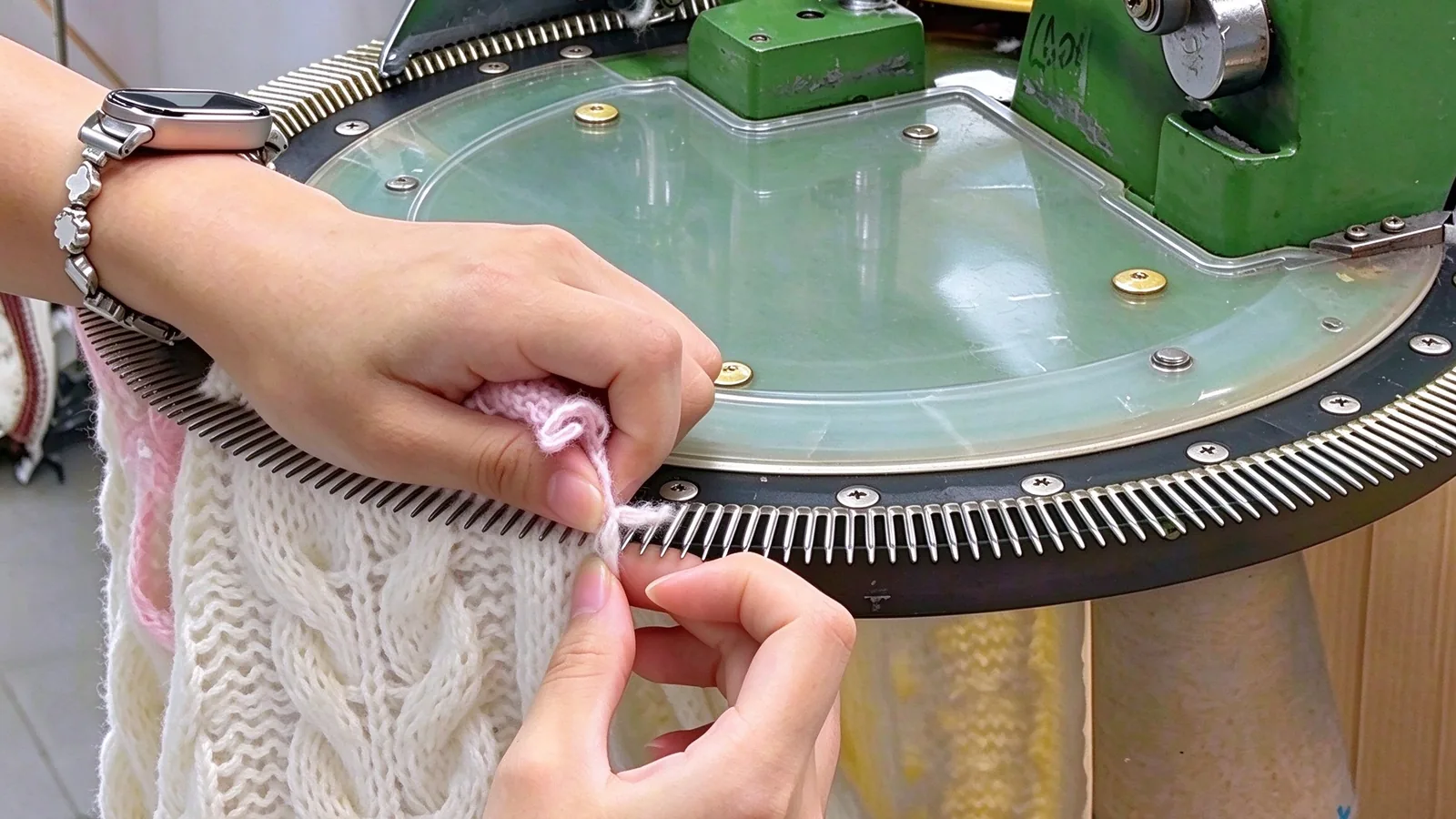
The fix: a matching coarse-gauge linking machine (3G/5G) and skilled operators linking stitch by stitch for flat, natural seams.
4. Sourcing advice for cable styles
- Use stock yarn: a 3G/5G cable uses 500 g+ per piece, so a dedicated dye lot triggers heavy small-vat fees. Stock yarn (merino blends, anti-pilling acrylic) lets you start at 50 pieces.
- Allow tolerance in the spec: cable fabric contracts laterally and stretches under weight, so take the factory's advice and build in a sensible post-wash tolerance.
- Check the machine base: do not use a workshop with only fine-gauge machines or little coarse-gauge experience. Choose a factory with 3GG–7GG coverage and 15+ years of set-up experience.
In summary
Cable knitwear is retro aesthetics married to precision machine dynamics. Its substantial hand and premium margin make it a seasonal anchor piece — but only a factory with real technical control and flexible MOQ can turn a beautiful sketch into reliable bulk.
About Jinya Knitwear
Planning a heavyweight cable collection and need precise machine set-up? Jinya supports coarse-gauge knit manufacturing.
- Full gauge 1.5GG–16GG: complete coarse (3G/5G) and medium (7G) machine base, with 15+ years of programming experience for Aran cables, rope twists and complex structures.
- Stock yarn and low MOQ: a rich coarse-gauge stock yarn library supports a 50-piece minimum and avoids small-vat fees on heavyweight styles.
- Precise washing and setting: standardised milling and board steam setting solve stretching and shrinkage on heavy cables.
- Fast sampling: 3–7 day samples; 100% of the sampling fee refunded on orders of 300+ pieces of the same style.
What is the difference between 3G and 7G cables?
3G gives deep, heavy cables at 500–800 g; 7G keeps the cable line clear with less weight.
Why do cables break yarn or needles?
Multi-needle crossings create a tension peak; programmers add a loosen course and control racking speed.
Do cable sweaters shrink?
Yes — heavy cables need board setting to hold wash shrinkage within ±3%.
Olivia handles operations content for Jinya, covering knitwear sourcing, product development and garment care — turning the questions buyers ask on the factory floor into practical, checkable guides.
Ms. Liu has run knitting floors for more than 20 years, overseeing yarn routing, machine programming, linking and final QC. She reviews every technical claim published here.