Compliance & Material Certifications
What we can source, which documents we can hand over, and what we will not claim. Straight answers for UK and EU buyers.
Certification is a chain, not a label.
GRS, RWS and GOTS are chain-of-custody standards: the farm or recycler, the spinner, the knitter and the garment maker must each be certified, and every handover is covered by a transaction certificate. Buying certified yarn does not make a certified sweater — and we will not pretend otherwise.
What we can do is source certified yarns from mills inside the Dalang cluster, hand over their certificates, and be honest about where our own certification ends. That is more useful to a compliance team than a logo we cannot defend.
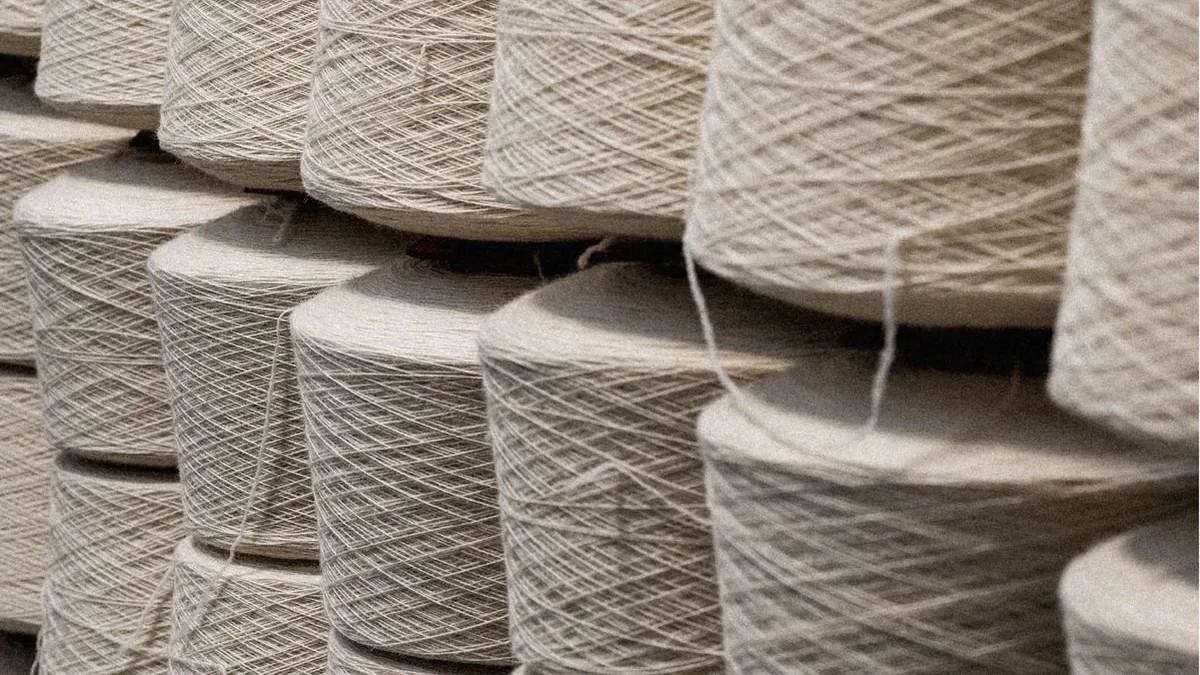
Undyed natural yarn, waiting for a colour decision.
Paperwork that survives an audit
Every order can be documented at material level. Ask for these at quotation stage so they are built into the timeline.
Yarn mill certificates
Copies of the spinner's GRS, RWS, GOTS, RCS or OEKO-TEX scope certificate for the yarn used in your order.
OEKO-TEX® yarn certificates
STANDARD 100 certificates for the yarn itself where the mill holds one — useful for skin-contact claims on the material.
REACH & SVHC declarations
Written confirmation from the yarn supplier on restricted substances and the current SVHC candidate list.
Fibre composition & care labels
Composition wording prepared to EU Regulation 1007/2011 and UK labelling expectations, with care instructions.
Test reports
Colourfastness, pilling, shrinkage and dimensional stability reports from third-party labs, per order or per style group.
Traceability pack
Yarn lot, spinner, knitting date and finishing records — the data your compliance team needs for Digital Product Passport preparation.
The standards behind the yarn
Listed as text references to the standards, not as certification of Jinya Knitwear. Certificates are issued to the yarn mill and passed to you with the order.
Three routes, chosen by your brief
Buyers usually arrive with one of three material directions. We quote against the brief and tell you what documentation comes with each option.
Organic
- —GOTS organic cotton
- —Undyed natural fibres
- —OEKO-TEX® certified cotton
Recycled
- —GRS recycled polyester & nylon
- —Recycled wool
- —RCS recycled blends
Responsibly sourced
- —RWS wool
- —RMS mohair / RAS alpaca
- —Mulesing-free wool
These are options we can source. Whether the finished garment can carry a certification claim still depends on the whole chain being certified — see below.
Welfare and traceability, fibre by fibre
We can source yarns certified to the three Textile Exchange animal-fibre standards below. Each one covers animal welfare, land management and chain of custody from farm to finished yarn.
Responsible Wool Standard
The most widely used responsible wool standard. Mulesing is prohibited, sheep health and welfare are verified, and the wool is tracked through farm, spinner, dyer and garment stages under chain of custody.
Responsible Mohair Standard
A dedicated standard for mohair: angora goats are raised and shorn under verified welfare conditions, grazing land is managed responsibly, and the fibre is traceable through the supply chain.
Responsible Alpaca Standard
Covers alpaca welfare during raising and shearing, protects the farmland ecosystem, and requires full traceability of the fibre from farm to yarn.
Certification belongs to the yarn and its chain of custody, not to our factory. Certificates are issued to the certified mill and passed to you with the order; we do not use these marks on garments or hangtags.
Accessed through the Dalang cluster
Dalang is the densest knitwear yarn cluster in China. Certified yarn usually arrives in 1–3 days instead of the week a trading company needs to relay the request up the chain — but it still comes with a premium and a higher minimum.
| Standard | Material | Availability |
|---|---|---|
| GRS | Recycled polyester / nylon | Widely available in Guangdong, including Dongguan spinners |
| RWS | Responsible wool & blends | Available through certified wool spinners and traders |
| GOTS | Organic cotton | Available from certified organic cotton supply chains |
| RCS | Recycled content (lighter claim) | Useful when GRS is not required by the buyer |
| RMS | Responsible mohair (angora goat) | Welfare-certified mohair through partner spinners; seasonal |
| RAS | Responsible alpaca | Welfare-certified alpaca yarn; limited colour range in stock |
| OEKO-TEX® | Certified cotton & blends | Common across regular spinners; certificate supplied per lot |
Availability and price premium depend on yarn count, colour and order volume. Certified yarn is quoted separately from stock yarn.
What we do not claim
We are not a GRS, RWS or GOTS certified garment manufacturer. We cannot issue transaction certificates for finished garments, and we do not put certification logos on products or hangtags.
If your compliance team requires a certified final product, tell us at the inquiry stage. We will give you a clear answer on whether we can meet it — without vague wording or delays.
We would rather lose a quote than put your brand in front of a regulator or retailer with a claim it cannot defend.
The regulations behind the label
SVHC screening and restricted-substance declarations from the yarn mill.
Fibre composition wording and care labelling prepared for EU and UK markets.
Supply-chain transparency information available on request for brands that report under the Act.
Packaging material data and lot-level traceability records to support your reporting and Digital Product Passport preparation.
Questions compliance teams ask
Can you supply GRS-certified recycled yarn?+
Do you hold RWS, GRS or GOTS certificates yourselves?+
Then can you make a GRS-certified sweater?+
What can you do if my compliance team needs certification?+
Can you arrange OEKO-TEX® STANDARD 100 testing for my styles?+
Send us your compliance requirement first
Tell us the standard, the material and the deadline. We will reply with what is possible, what it costs and what documentation you will receive.